The fastest path to a safe, accessible stay is straightforward: search verified listings with specific measurements, contact the host directly for doorway widths and bathroom photos, and confirm equipment availability before you pay a deposit. Whether you need a vacation home near Zion National Park or a wheelchair-accessible van for a road trip, the same principle applies. Vague “accessible” tags alone are not enough.
Start here with three immediate steps:
- Filter, then verify. Use accessibility filters on major platforms, but treat any tag as a starting point, not a guarantee. Large housing marketplaces commonly tag listings as “wheelchair accessible” while listing completeness varies widely.
- Message the host before booking. Ask for doorway widths (minimum 32 inches), bathroom entry clearance, and current photos of the accessible route.
- Confirm equipment and parking. Ask whether a roll-in shower, grab bars, and accessible parking are present, and get written confirmation in the platform’s messaging system.
Key Takeaways
Verified measurements and direct host communication are the two most reliable tools for booking a wheelchair accessible rental with confidence.
| Point | Details |
|---|---|
| Verify before you book | Request doorway widths, bathroom entry clearance, and timestamped photos before paying any deposit. |
| ADA rights protect long-term renters | Federal fair housing law requires landlords to allow reasonable modifications and respond to accommodation requests. |
| Vehicle type determines usability | Side-entry, rear-entry, and full-floor van conversions each suit different chair types — confirm ramp angle and weight capacity. |
| Equipment rental reduces travel burden | Local delivery of wheelchairs, scooters, or ramps typically costs $15 per day depending on equipment type. |
| Rentalsinstgeorgeutah | Offers direct booking for St. George vacation homes with dedicated accessibility support and local property knowledge. |
Table of Contents
- How do you find wheelchair accessible vacation rentals online?
- Finding wheelchair-accessible apartments and long-term rentals
- What types of wheelchair-accessible vehicle rentals are available?
- What accessibility features should you verify before booking?
- What should you ask hosts or van providers before you commit?
- How much does renting mobility equipment cost, and what about insurance?
- How Vacation Rental St George UT supports guests with mobility needs
- What the accessibility gap in rental listings actually costs travelers
- Plan your accessible stay with Rentalsinstgeorgeutah
- Useful resources for accessible housing and tenant rights
- Sources
How do you find wheelchair accessible vacation rentals online?
Accessibility filters exist on most major platforms, but they rarely tell the full story. A listing tagged “accessible” might mean a single grab bar in the bathroom or a fully roll-in shower with 60-inch turning radius. The difference matters enormously depending on whether you use a manual wheelchair, a power chair, or travel with a caregiver.
What actually works when searching:
- Use filters labeled “wheelchair accessible,” “step-free access,” or “accessible bathroom” as a first pass.
- Search keywords like “roll-in shower,” “ADA compliant,” or “no-step entry” in the listing description field when filters are limited.
- Look for listings that publish actual measurements (not just “wide doorways”) and include a floor plan or accessible-route diagram.
- Prioritize listings with guest-uploaded photos showing the bathroom entry, ramp condition, and parking area.
- Check whether the host has responded to accessibility questions in prior guest reviews.
Hosts of specialized accessible properties consistently report that ambiguous marketing language is the top frustration for travelers with mobility needs. Direct, measurement-based communication between guest and host is the most reliable fix. A listing that answers your questions before you ask them is a strong trust signal.
Pro Tip: Before booking, send a short message asking for three specific photos: the bathroom entry (with a tape measure visible), the front door threshold, and the accessible parking space. Hosts who respond quickly with real measurements are the ones worth booking.
You can also review the best vacation rental sites in the U.S. to compare which platforms publish the most complete accessibility data for each listing.
Finding wheelchair-accessible apartments and long-term rentals
Long-term accessible housing requires a different search strategy than vacation rentals. Apartment listing sites use inconsistent tagging, so keyword searches and direct outreach matter more than filters alone.
Where to search:
- Use “wheelchair accessible,” “ADA compliant,” or “handicap friendly” as search terms on major apartment platforms alongside standard location filters.
- State-based databases like AccessVA help residents locate affordable, accessible rental housing within a specific state or region. Check whether your state has a comparable registry.
- Contact your local housing authority or Center for Independent Living. These organizations often maintain unpublished lists of accessible units.
- HUD’s fair housing rights and reasonable accommodation guidance explains that landlords of most private rentals are legally required to allow reasonable modifications and accommodate disability-related requests.
Documentation and timing tips:
- Request specific measurements in writing before signing a lease: doorway widths, bathroom turning radius, and ramp or elevator access.
- If you need a modification (a grab bar, a ramp, a lowered threshold), submit a written reasonable accommodation request early. Landlords must respond within a reasonable timeframe under federal fair housing law.
- Start your search at least 60–90 days before your target move-in date. Accessible units are fewer in number and lease faster.
- Keep copies of all written communications about accessibility features. If a landlord’s verbal promise doesn’t appear in the lease, get it added as an addendum.
What types of wheelchair-accessible vehicle rentals are available?
Accessible vehicle rentals fall into three main conversion types, each suited to different mobility needs and travel styles.
Main vehicle types:
- Side-entry conversions use a ramp that deploys from the sliding door. They work well in standard parking spaces and suit manual or lighter power wheelchairs.
- Rear-entry conversions deploy a ramp from the back of the van. They require more clearance behind the vehicle but often offer a lower ramp angle, which suits heavier power chairs.
- Full-floor lowered conversions remove the factory floor and lower the entire vehicle floor, providing maximum headroom and the widest range of wheelchair sizes. These are the most flexible option for taller power chairs or users who prefer to remain in their chair while driving.
Most rental packages from accessible van providers include tie-down systems, safety belts, a ramp or lift, and basic operator training. Roadside assistance and 24/7 emergency support are standard inclusions worth confirming before you sign.
Rates are approximate market ranges and vary by region, season, and provider. Confirm current pricing directly with the rental company.
Accessible vehicle rental training and 24/7 roadside support are as important as vehicle specs for travelers who depend on mobility equipment. Ask specifically whether training is included and whether roadside support covers the full rental period.
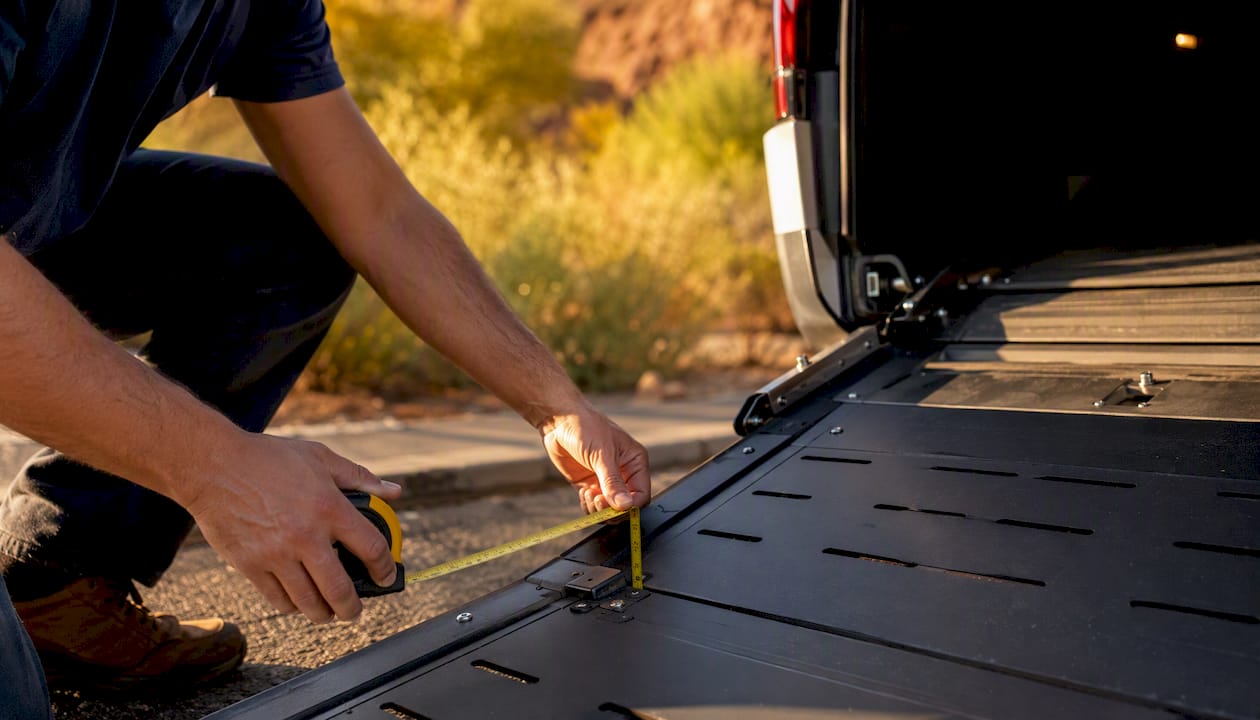
What accessibility features should you verify before booking?
A checklist you can copy directly into a host message or phone call script:
Essential measurements to request:
- Front door and all bedroom doorways: minimum 32 inches clear width (36 inches preferred for power chairs)
- Bathroom entry: minimum 32 inches clear width
- Roll-in shower or roll-under sink: confirm no curb or a curb under 0.5 inches
- Turning radius in bathroom: minimum 60-inch clear floor circle
- Ramp slope: no steeper than 1:12 (one inch of rise per 12 inches of run)
- Accessible parking: minimum 8-foot-wide space with an adjacent 5-foot access aisle
Features by mobility need:
- Manual wheelchair users: focus on doorway widths, ramp slope, and surface type (carpet vs. hard floor).
- Power wheelchair users: prioritize turning radius, floor-level thresholds, and elevator access in multi-story properties.
- Guests with a caregiver: confirm bedroom size allows caregiver access on both sides of the bed and that the bathroom has caregiver assist space.
Publishing specific, verifiable mobility details — roll-in showers, grab bars, 32-inch-plus doorways, step-free access — rather than generic “accessible” labels is what separates trustworthy listings from guesswork. Save all listing screenshots, floor plans, and host messages to a shared folder before your trip.
What should you ask hosts or van providers before you commit?
A short, direct message gets better results than a long list of questions. Lead with the most critical item, then layer in secondary requests.
Priority verification items:
- Doorway widths (front door, bedroom, bathroom)
- Bathroom entry type (roll-in shower, tub with bench, or standard)
- Photos of the accessible route from parking to front door
- Accessible parking availability (dedicated space or nearest option)
- Equipment on-site (grab bars, shower chair, ramp condition)
Sample message you can adapt:
Keep the message under 80 words. Hosts respond faster to focused, specific questions than to open-ended accessibility inquiries. For common booking pitfalls to avoid, a short pre-booking checklist prevents most surprises.
Pro Tip: Ask for a short video walk-through of the accessible route rather than static photos. A 60-second clip from parking to bathroom reveals threshold heights, surface changes, and tight corners that photos routinely miss. Timestamped videos also confirm current property condition.
How much does renting mobility equipment cost, and what about insurance?
Renting equipment locally or having it delivered to your rental property is often more practical than transporting heavy mobility aids. Costs vary by item, rental duration, and delivery distance.
Rates are approximate market ranges. Confirm current pricing with local medical equipment suppliers.
Some specialty accessible rentals provide on-site medical equipment for guest use, which eliminates delivery fees entirely. Ask hosts whether any equipment is included before arranging a separate rental.
Insurance and deposit considerations:
- Accessible van rentals typically require a damage deposit of $250–$500 and may require a credit card hold for the full vehicle value.
- Personal auto insurance rarely covers rental vans with wheelchair conversions. Confirm coverage with your insurer before travel and ask the rental company about their supplemental damage waiver.
- For mobility equipment rentals, ask whether the delivery company carries liability insurance and what the damage policy covers.
How Vacation Rental St George UT supports guests with mobility needs
Rentalsinstgeorgeutah publishes vacation homes in St. George, Utah with guest-focused listing details designed to reduce pre-arrival uncertainty. Properties include specific notes on step counts, parking proximity, and available amenities so guests can assess suitability before reaching out.
The booking process at Rentalsinstgeorgeutah is built around direct communication. Guests with mobility needs can contact the support team to request specific measurements, ask about equipment availability, and confirm accessible parking before finalizing a reservation. Flexible check-in options and customizable stay packages mean you can arrange logistics around your schedule rather than a fixed timeline.
St. George’s desert terrain and proximity to Zion National Park make it a popular destination, and the city’s newer developments tend to offer more accessible infrastructure than older rural properties. Rentalsinstgeorgeutah’s local knowledge helps guests identify which properties are most practical for their specific mobility setup.
Pro Tip: If you’re a host or property manager, publish at least three accessibility measurements in your listing description — front door width, bathroom entry width, and shower type. Guest-uploaded photos of the accessible route build more trust than any marketing language.
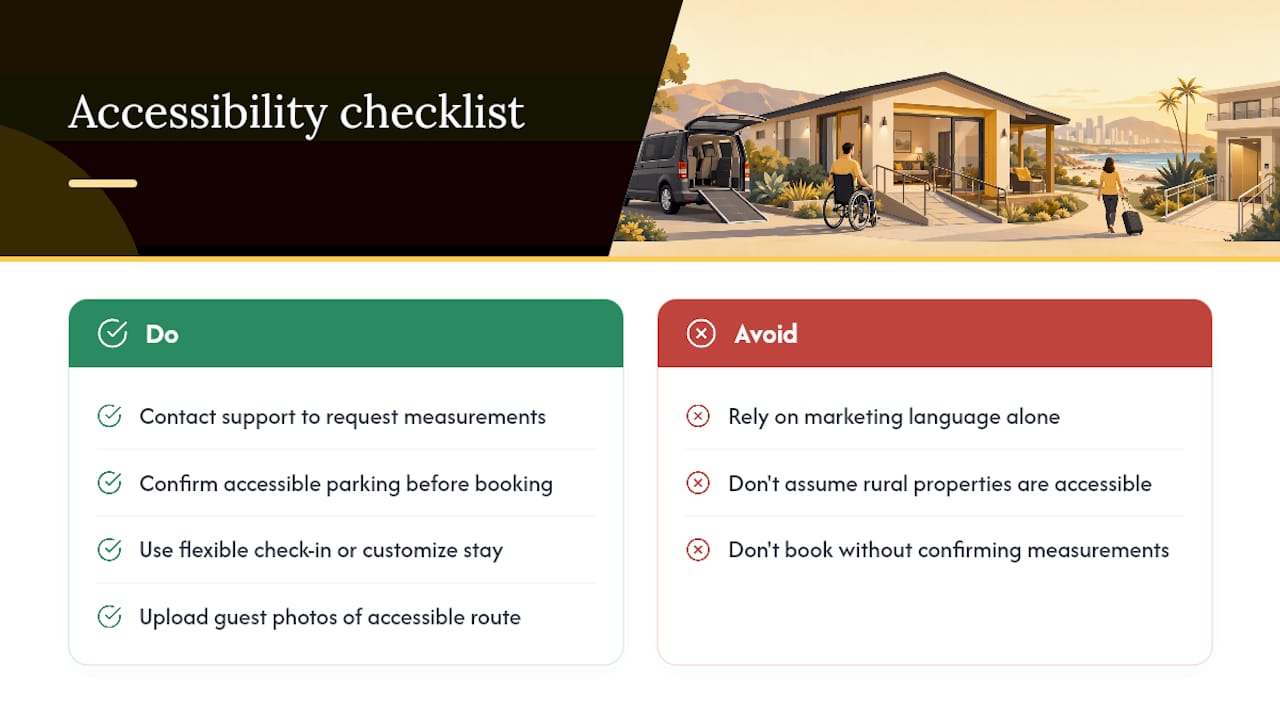
What the accessibility gap in rental listings actually costs travelers
Most travelers with mobility needs spend more time verifying a rental than booking it. That’s not a personal failing. It reflects a genuine gap in how listings are published across the industry.
The standard “accessible” tag on most platforms was designed for compliance, not communication. It tells you a property checked a box somewhere. It does not tell you whether your power chair fits through the bathroom door or whether the “accessible parking” is 200 feet from the front entrance across a gravel path.
The properties that get this right share one habit: they publish measurements the way a hardware store labels lumber. Specific, verifiable, and unambiguous. A listing that says “36-inch front door, roll-in shower with no curb, dedicated accessible parking 15 feet from entrance” takes five minutes to write and saves a guest hours of back-and-forth. It also converts better, because travelers who find what they need stop looking.
The same logic applies to accessible vehicle rentals. Knowing that a van includes tie-downs, a ramp, and 24/7 roadside support is useful. Knowing the ramp angle and the maximum chair weight capacity is what actually lets someone book with confidence.
Plan your accessible stay with Rentalsinstgeorgeutah
St. George, Utah is one of the most rewarding accessible destinations in the American Southwest, and Rentalsinstgeorgeutah makes it easier to get there with confidence. The properties listed on the platform come with dedicated customer support, flexible booking terms, and the kind of local knowledge that helps guests with mobility needs identify the right home before arrival.
Direct bookings through Rentalsinstgeorgeutah give you a single point of contact for accessibility questions, equipment coordination, and itinerary adjustments. No third-party intermediary, no automated response queue. Browse accessible vacation homes in St. George and send a direct inquiry with your specific accessibility requirements. The team responds with property-specific details so you can verify and book with clarity.
Useful resources for accessible housing and tenant rights
These official and specialized sources are worth bookmarking for deeper research or formal accommodation requests.
- HUD Fair Housing Rights: HUD’s federal fair housing guidance covers reasonable accommodation obligations, tenant rights, and how to file a complaint if a landlord denies a legitimate accessibility request.
- U.S. Department of Labor, Office of Disability Employment Policy: ODEP publishes broader accessibility policy resources and program guidance relevant to disability access across housing and employment contexts.
- AccessVA: AccessVA is a state-based database for affordable, accessible rental housing in Virginia. Check whether your own state has a comparable registry through your local housing authority.
- W3C Web Accessibility Validator: The W3C validator helps hosts and platforms confirm that digital listing pages and booking forms work with screen readers and assistive technology.
- Local Centers for Independent Living: Search the ILRU directory for your nearest Center for Independent Living. These organizations often maintain local accessible housing lists and can assist with reasonable accommodation documentation.
- State and local disability services offices: Many states operate housing accessibility programs beyond federal minimums. Contact your state’s housing finance agency for state-specific programs and accessible property registries.