Drive if you want flexibility, hop on SunTran’s $5 bus if you’re traveling light, or head to Kolob Canyons if you’d rather skip the crowds entirely. Springdale’s south entrance sits 41 to 42 miles from St. George, a 45 to 65 minute trip depending on traffic and exactly where you’re headed. For most families, that means:
- Driving your own car works best if you’re hauling gear, kids, or making stops along the way.
- SunTran’s Zion Route is the budget move for solo travelers and couples who don’t mind a bus schedule.
- Kolob Canyons cuts your drive to roughly 30 minutes if you’re short on time or dread Springdale’s parking scramble.
Leave before 7:00 a.m. in high season. Everything after that gets harder.
Key Takeaways
Driving from St. George covers 41 to 42 miles to Zion’s south entrance in 45 to 50 minutes, with SunTran and Kolob Canyons offering practical alternatives depending on budget and crowd tolerance.
| Point | Details |
|---|---|
| Know your distance | St. George to Springdale is 41 to 42 miles, typically a 45 to 50 minute drive via I-15 and SR-9. |
| Leave early | Departing before 7:00 a.m. in high season avoids the 15 to 20 minute delay common after 8:00 a.m. |
| Use SunTran for budget travel | The Zion Route runs Monday through Saturday for a $5 one-way fare, cash, card, or Venmo accepted. |
| Consider Kolob Canyons | A 22-mile, 30-minute drive from St. George with far fewer crowds than Springdale. |
| Base yourself in St. George | Rentalsinstgeorgeutah offers family-sized homes near Zion at better value than Springdale hotels. |
Table of Contents
- How Far Is St. George From Zion National Park?
- Which Transport Option Should You Choose?
- Where Should You Park in Springdale?
- Is Kolob Canyons a Better Option for You?
- When Should You Leave and What Should You Pack?
- Accessible Travel Between St. George and Zion
- Fuel and Rest Stops Along the Way
- Driving Safety Tips for the Route to Zion
- What Does It Cost to Enter Zion National Park?
- Why St. George Beats Springdale as Your Home Base
- Book Your St. George Basecamp for a Zion Day Trip
- Sources
- FAQ
How Far Is St. George From Zion National Park?
The numbers are straightforward, and they matter for planning your morning. Springdale’s south entrance sits about 41 to 42 miles from St. George, a drive that typically runs 45 to 50 minutes under normal traffic. Push on to the Zion Canyon Visitor Center itself and you’re looking at closer to 55 to 65 minutes once you account for the final crawl through town.
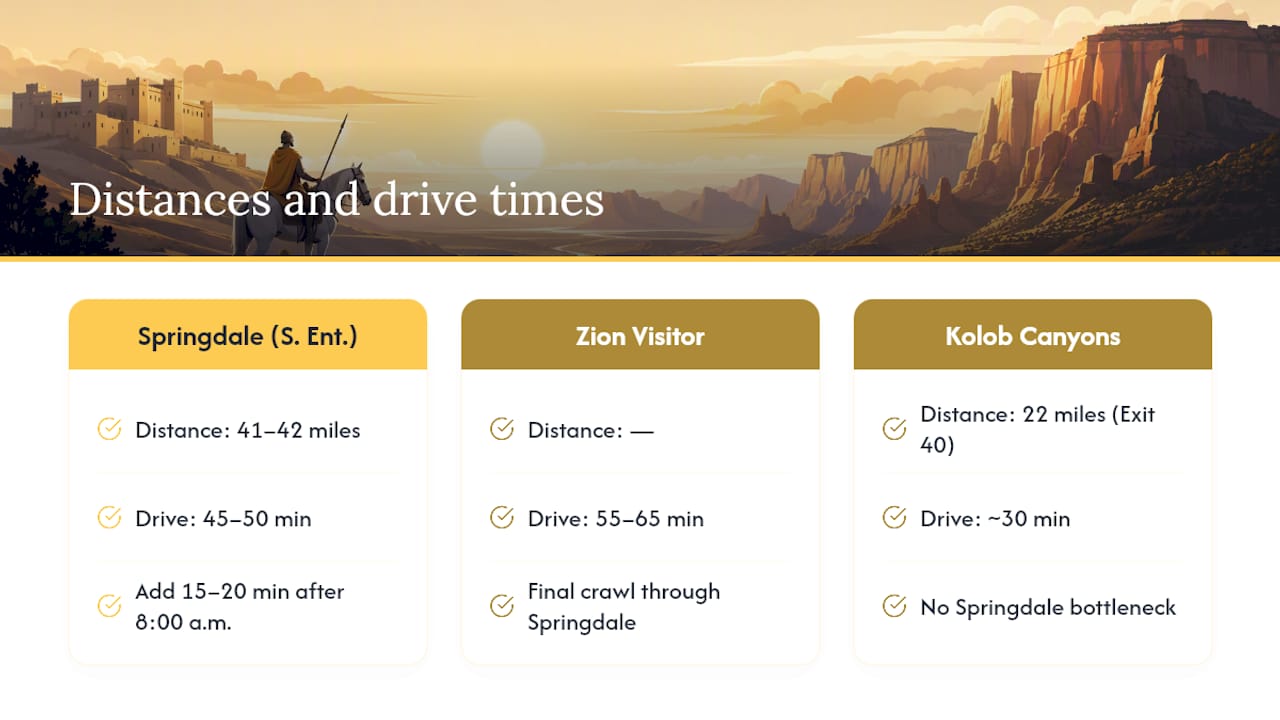
The route almost never changes: I-15 North to Exit 16, then SR-9 east straight into Springdale. It’s the fastest path locals use, and there isn’t a meaningful shortcut around it. That last stretch through Rockville and into Springdale is where your drive time gets unpredictable. Two-lane traffic, pedestrians darting between shuttle stops, and RVs braking for scenic pullouts can turn a smooth 10-minute stretch into 20.
Kolob Canyons is the outlier worth knowing about. It sits about 22 miles from St. George off I-15 Exit 40, roughly a 30-minute drive with none of the Springdale bottleneck.
Pro Tip: If you’re leaving after 8:00 a.m. during summer, add 15 to 20 minutes to whatever GPS tells you. Springdale traffic backs up fast once the parking lots start filling.
Which Transport Option Should You Choose?
Your best option depends less on preference and more on your group size, your budget, and how much control you want over your schedule.
Driving yourself
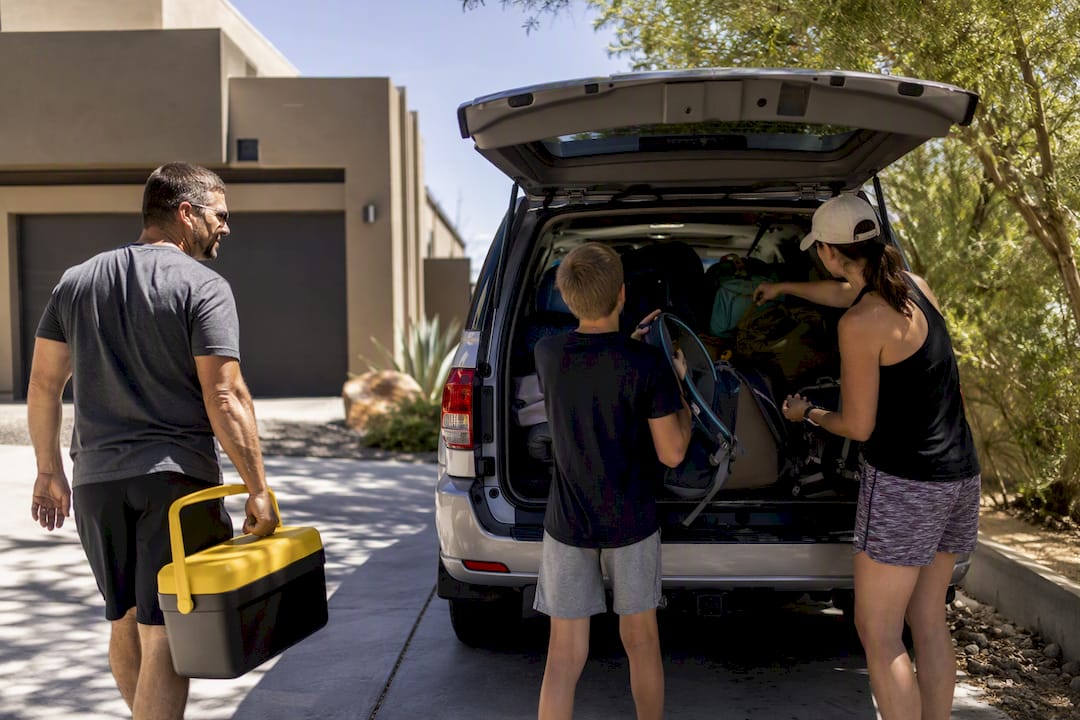
Driving gives you the most freedom, and for families packing coolers, hiking gear, and car seats, it’s usually the only practical choice. You control your departure time, your route, and whether you stop at Grafton ghost town or a roadside overlook on the way. The tradeoff is parking. Arrive after mid-morning during peak season and you’ll be hunting for a spot well outside the Visitor Center lot.
SunTran’s Zion Route
This is the workhorse option for visitors without a car or anyone trying to keep costs down. SunTran’s Zion Route runs Monday through Saturday, covering the roughly 42-mile stretch between St. George and Springdale for a flat $5 one-way fare. You can pay with cash, credit card, or Venmo right on the bus, and SunTran also offers a monthly pass for anyone making repeat trips. The route drops you within walking distance of Springdale’s Lion Boulevard corridor and the Zion Canyon Visitor Center entrance, which connects you straight into the park’s internal shuttle system.
Zion White Bison (ZWB)
Don’t confuse this with SunTran. Zion White Bison operates a separate route between Virgin and Springdale, and it does not serve St. George at all. It runs daily during the week but shifts to Sundays and holidays only for its full schedule in the off-peak calendar, and it will not accept a SunTran monthly pass. If your trip starts in St. George, ZWB isn’t part of your plan unless you’re connecting through Virgin for a specific reason.
Private shuttles and rideshare
Local operators like St. George Shuttle offer reserved transportation with 24/7 phone booking, which makes sense for larger groups who want door-to-door service without coordinating multiple cars. Group pricing tends to beat splitting rideshare fares across several vehicles. Speaking of rideshare: Uber and Lyft do operate in the St. George area, but availability thins out in Springdale, and cell signal inside the canyon is spotty enough that your return pickup can take longer than expected. If you’re relying on rideshare for the trip home, build in a buffer.
- Solo day-tripper or budget traveler: SunTran’s Zion Route.
- Family with gear or a multi-stop itinerary: Drive yourself.
- Large group wanting simplicity: Private shuttle, booked ahead.
- No car and traveling on a schedule that doesn’t match SunTran: Rideshare, with a backup plan for the return.
Where Should You Park in Springdale?
Springdale runs a paid parking system during peak season, and knowing the zones ahead of time saves you a lot of circling.
- Zone A sits closest to the park entrance and fills first, often by mid-morning in summer. Expect the highest hourly rates here.
- Zone B and Zone C stretch further from the entrance along Zion Park Boulevard, with lower rates and better odds of finding a spot after 9:00 a.m.
- Paid enforcement typically runs from 6:00 a.m. to 6:00 p.m. during the busy season, so budget accordingly if you’re staying into the evening.
Once you’ve parked, Springdale’s free town shuttle picks up the slack. It runs along Main Street, connecting the paid lots to the pedestrian entrance of the park, so you’re never actually walking the full distance from a Zone C spot.
Inside the canyon itself, the National Park Service enforces a shuttle-only policy during peak shuttle season, meaning private vehicles can’t drive Zion Canyon Scenic Drive when it’s in effect. Dates shift year to year, so check NPS the morning of your trip rather than relying on last season’s calendar.
Your parking plan in short: early arrival means you head straight for the Visitor Center lot. Mid-morning arrival means you park in Zone B or C and ride the town shuttle in.
Is Kolob Canyons a Better Option for You?
Kolob Canyons deserves more attention than it gets, especially if your schedule is tight or you’re allergic to crowds.
- Distance and time: About 22 miles from St. George via I-15 Exit 40, roughly a 30-minute drive.
- Crowd level: Dramatically lower than Springdale, even on a summer Saturday.
- Best use case: Short visits, travelers avoiding the shuttle system entirely, or anyone who wants a quieter hike without the Zion Canyon foot traffic.
- The tradeoff: Fewer visitor services, a smaller trail network, and a different scenic character. You’re not getting the Narrows or Angels Landing here.
If your day trip is more about the drive and a couple of solid trails rather than checking off Zion’s signature hikes, Kolob is worth the detour instead of fighting for Springdale parking.
When Should You Leave and What Should You Pack?
Timing your departure correctly matters more than almost anything else on this trip.
- Leave before 7:00 a.m. during high season. Waiting until after 8:00 a.m. in summer typically adds 15 to 20 minutes to your drive because of Springdale congestion alone.
- Plan your return with the same caution. Late afternoon traffic leaving the canyon runs stop-and-go, especially between May and September.
- Pack water, at least one liter per person, plus sunscreen and layers. Zion’s temperature swings between the canyon floor and higher trails.
- Bring sturdy shoes, a charged phone or a power bank, and a payment method that works for parking meters, which increasingly favor card or app payment over cash.
- If you’re traveling with kids, a carrier beats a stroller on most trails, and shorter paths like the Pa’rus Trail give younger children a real Zion experience without the elevation gain.
Pro Tip: Fill your gas tank in St. George before you leave. Springdale has limited fuel options, and you don’t want to be searching for a station on a day you’re racing shuttle lines.
Accessible Travel Between St. George and Zion
Zion National Park has made real investments in accessibility, and it’s worth knowing what’s available before you go. The park’s shuttle buses are wheelchair accessible, with space and ramps built into every vehicle running the Zion Canyon route during shuttle season. The Zion Canyon Visitor Center, Human History Museum, and Zion Lodge all offer accessible parking, restrooms, and paved or graded pathways.
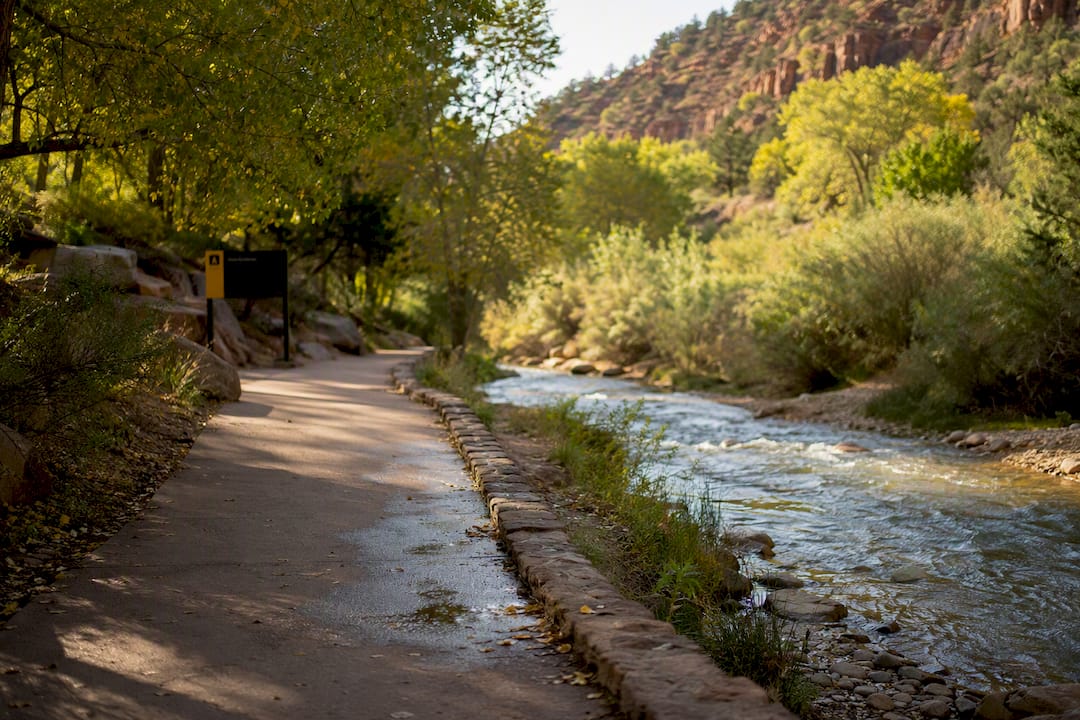
On the trail side, the Pa’rus Trail is the standout choice. It’s paved, mostly flat, and runs along the Virgin River for roughly two miles round trip, making it one of the few Zion trails genuinely suited to wheelchairs and mobility devices. The Zion Human History Museum’s short loop trail offers similar accessibility with canyon views.
The drive itself from St. George doesn’t present unusual accessibility barriers. I-15 and SR-9 are standard paved highways with rest areas offering accessible restrooms. Springdale’s town shuttle and SunTran’s Zion Route buses both accommodate wheelchairs and mobility aids, which matters if you’re planning to park in an outer zone and ride in rather than walk. If you need a specific accommodation inside the park, such as a temporary accessibility permit for vehicle access to areas otherwise restricted to shuttles, that’s arranged directly through the park’s visitor center rather than in advance.
Fuel and Rest Stops Along the Way
St. George is your last, best chance for cheap, plentiful gas. Multiple stations cluster near the I-15 interchange, and prices here typically run lower than anything you’ll find closer to the park. Fill up before you get on I-15, not after.
Once you’re on SR-9 headed toward Springdale, options thin out considerably. There are a few small gas stations along the corridor, but they’re pricier and not always reliable for a fast fill, especially during peak season when lines form. If your tank is anywhere near empty, treat St. George as your mandatory stop, not an optional one.
Rest stops follow a similar pattern. St. George has the full range of options, restaurants, grocery stores, and public restrooms are easy to find. Along SR-9, small towns like Hurricane and La Verkin offer basic services, gas, fast food, a convenience store, but nothing extensive. Springdale itself has restaurants and shops geared toward park visitors, though prices trend higher and parking near them competes with park-goer traffic.
If you’re traveling with young kids or anyone who needs regular bathroom breaks, plan your stop in St. George before departure rather than counting on finding something convenient mid-route. The stretch through Hurricane and La Verkin has options, but they’re limited enough that a Saturday morning rush can mean waiting.
Driving Safety Tips for the Route to Zion
The drive from St. George to Zion is straightforward, but a few real hazards are worth knowing about before you go.
Wildlife crossings are common, especially at dawn and dusk. Deer frequently cross SR-9 near Rockville and the outskirts of Springdale, and a collision at highway speed is a genuine risk during those low-light hours. Slow down when you see wildlife crossing signs, and don’t assume an empty road stays empty.
The SR-9 stretch through Rockville and Springdale narrows to two lanes with pedestrians, cyclists, and shuttle buses sharing tight space. Watch for foot traffic near shuttle stops, particularly in the evening when visitors are walking back to parking after a full day of hiking.
Summer heat creates its own driving risk. Utah’s southern desert regularly exceeds 100 degrees Fahrenheit in July and August, which means overheating vehicles and dehydrated hikers along the roadside aren’t unusual sights. Keep water in the car, not just for hiking, and check your coolant levels before a long summer drive.
Winter brings a different challenge. Higher elevations near Kolob Canyons can see snow and icy patches that St. George rarely experiences. If you’re headed that direction between November and March, check road conditions before you leave, since a clear morning in St. George doesn’t guarantee the same at higher elevation.
What Does It Cost to Enter Zion National Park?
Zion National Park charges a standard entrance fee, and the National Park Service is the authoritative source for current rates, since fees are subject to periodic adjustment. Most visitors pay per vehicle, which covers everyone inside for seven consecutive days. If you’re arriving by SunTran, shuttle, or another form of public transit rather than your own car, per-person fees typically apply instead.
An America the Beautiful annual pass covers entrance to Zion along with every other federal recreation site that charges a fee, which makes sense if you’re planning visits to multiple national parks within the same year, Bryce Canyon and Kolob Canyons among them since both fall under the same park designation.
Some areas and activities inside Zion require separate permits beyond the standard entrance fee. Overnight backcountry trips, canyoneering routes, and certain high-demand trails operate under their own permit systems, and increasingly these are managed through Recreation rather than a same-day walk-up process. If your day trip includes a specific trail or activity beyond general sightseeing, check whether it requires a separate reservation before you leave St. George. Showing up without one, only to find out at the gate, is a frustrating way to lose a morning.
Why St. George Beats Springdale as Your Home Base
Most guides treat St. George and Springdale as interchangeable jumping-off points, and that’s where they get it wrong. Springdale puts you steps from the entrance, but you’re paying resort rates for rooms that shrink every time a family tries to fit five people and a cooler of gear into them. St. George solves both problems at once, and the 45-minute drive really isn’t the inconvenience people assume it is when you’re leaving before 7:00 a.m. anyway.
Here’s what the conventional advice tends to miss: the drive time argument only holds up if you’re staying in the park until closing every day. Most families aren’t. You’re hiking for four or five hours, heading back for lunch, maybe swimming, then deciding the next morning whether to return to Zion or try Kolob Canyons or Snow Canyon instead. That flexibility only exists if your basecamp isn’t locked into a single canyon.
The exception worth naming honestly: if you’re chasing a sunrise permit at Angels Landing or The Narrows, Springdale’s proximity genuinely matters, and no basecamp strategy changes that math. For everyone else, prioritize space and value over the extra 15 minutes on the road.
— Jacob
Book Your St. George Basecamp for a Zion Day Trip
Rentalsinstgeorgeutah gives you more square footage for less money than a comparable Springdale hotel room, and that difference shows up the moment you’re trying to fit a family of five and a week’s worth of hiking gear into one space. Our vacation homes come with full kitchens, private patios, and the kind of room to spread out that a hotel simply can’t match, all within that same 45 minute drive to Zion’s south entrance.

Every property is set up for exactly the trip this guide describes: an early departure, a full day in the canyon, and a comfortable place to recover that evening without paying Springdale prices for the privilege. Browse our vacation homes in St. George to see what’s available for your travel dates, or check current rental deals if you’re planning a longer multi-park stay. Booking is straightforward, and our team is available to help you pick a property sized right for your group before you commit.
Sources
- Zion Route — City of St. George / SunTran
- Zion Corridor Park & Ride — Greater Zion
- St. George to Zion: 41 Miles, 50 Minutes (Day Trip Guide) — STG Newsletter
FAQ
Is St. George a good place to stay when visiting Zion?
Yes. St. George sits about 41 miles from Zion’s south entrance, roughly a 45 minute drive, and offers more spacious, affordable lodging than Springdale while still allowing an early morning arrival.
How long does it take to drive from St. George to Zion National Park?
Expect under an hour to the Springdale entrance and somewhat longer to reach the Zion Canyon Visitor Center itself, depending on traffic and time of day.
Which is nicer, Bryce or Zion?
Both parks offer distinct scenery, Zion’s towering canyon walls versus Bryce’s hoodoo formations, and the better choice depends on whether you prefer canyon hiking or unique rock formations rather than one being objectively superior.
How far are Bryce and Zion from St. George?
Zion’s south entrance is about 41 to 42 miles from St. George, while Bryce Canyon sits significantly farther, making Zion the more practical single day trip from a St. George basecamp.