Most visitors need about 2 to 3 days in Zion National Park to see the highlights without racing the clock. One day covers the essentials if you’re passing through, while four or more days opens up technical routes like the Subway or a top-down Narrows trek. The right number depends on your hiking pace, your permit luck, and how many mornings you’re willing to wake up before sunrise. Sample itineraries below cover every trip length.
TL;DR:
- Most visitors should allocate at least two to three days to experience Zion without feeling rushed, with four or more days needed for technical routes or permits.
- One-day visits can cover main highlights like Canyon Overlook and Riverside Walk but restrict access to major hikes like Angels Landing and The Narrows.
- Securing permits for Angels Landing involves advance lottery applications, and crowds or weather delays may impact plans, especially in summer.
- A two-day trip allows for a major hike and a secondary activity like The Narrows or exploring the east side, but early starts are essential for avoiding lines.
- Staying outside Zion, such as in St. George, offers more space, lower costs, and easier early-morning starts, which are crucial for high-demand activities.
Table of Contents
- How Many Days in Zion Fits Your Travel Style?
- What Does a One-Day Zion Itinerary Look Like?
- How Should You Plan a Two-Day Zion Trip?
- What’s the Best 3-Day Zion Itinerary?
- When Do You Need 4 or More Days in Zion?
- How Do the Shuttle, Permits, and Seasons Change Your Plan?
- Should You Stay in Springdale or St. George?
- A Local’s Take on Timing Your Zion Days
- What Most Zion Guides Get Wrong About Trip Length
- Where to Stay for Your Zion Trip: St. George Rentals
- Sources
- FAQ
How Many Days in Zion Fits Your Travel Style?
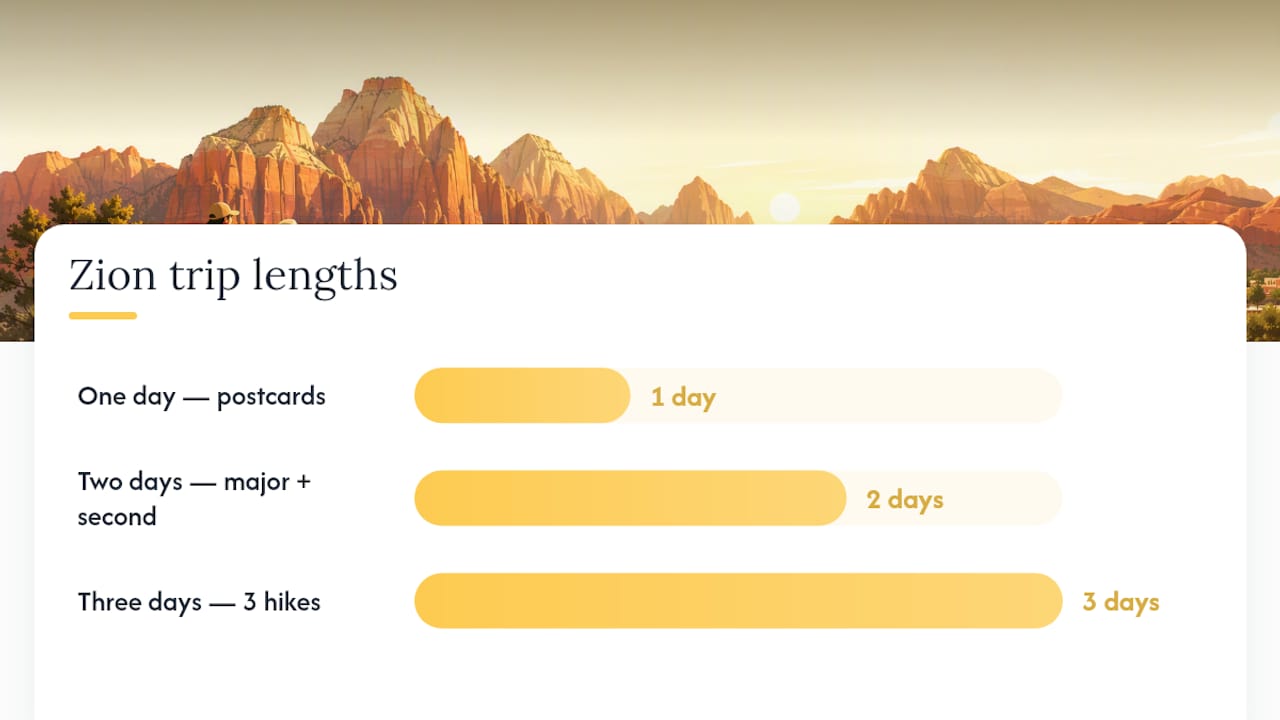
The honest answer changes depending on what you’re after. A single day gets you the postcard shots and one solid hike. Three days lets you actually breathe. Here’s how each length plays out in practice.
One day works for road-trippers stacking Zion into a bigger Utah or Nevada loop. You’ll hit Canyon Overlook, ride the shuttle through the main canyon, and squeeze in a shorter trail like Riverside Walk or the Lower Emerald Pool. You will not have time for Angels Landing and The Narrows both.
Two days is the minimum for anyone who wants one major hike done right, plus a second day for a different flavor of the park, whether that’s a wade into The Narrows or the quieter east side near the tunnel.
Three days is where Zion stops feeling rushed. ParkFriends calls two to three days the sweet spot for most visitors, and three lets you space out Angels Landing, The Narrows, and Observation Point across separate mornings instead of stacking them.
Four or more days matters for canyoneers chasing the Subway permit, photographers who want golden hour at multiple overlooks, or families pairing Zion with Bryce Canyon or Kolob Canyons without feeling like they’re on a scavenger hunt.
A few tradeoffs shape the decision regardless of length:
- Angels Landing requires advance planning since it runs on a permit lottery, not a walk-up line.
- Summer crowds mean earlier starts and longer shuttle waits, which eats into whatever days you have.
- EarthTrekkers suggests adding roughly one extra day for each additional big-name hike you want to do without feeling hurried.
What Does a One-Day Zion Itinerary Look Like?
One day means picking a lane and sticking to it. Arrive at the Zion Canyon Visitor Center by 7:00 or 7:30 AM, before parking fills and shuttle lines stretch. Here’s a realistic sequence:
- Visitor Center and parking (7:00 to 7:30 AM): Grab a map, check trail conditions, and use the restroom before boarding.
- Canyon Overlook Trail (8:00 to 9:30 AM, including drive time through the tunnel): A one-mile round trip with a payoff view over the canyon.
- Shuttle into Zion Canyon (10:00 AM onward): Ride to Zion Lodge or the Grotto stop.
- Riverside Walk or Lower Emerald Pool Trail (11:00 AM to 1:00 PM): Easy, paved, and family-friendly.
- Late lunch and departure (by 2:00 PM): Beat the afternoon shuttle backlog out of the canyon.
If Angels Landing permits didn’t come through or the Narrows shuttle line looks brutal, swap in the Watchman Trail near the visitor center. It’s less crowded and still delivers a strong canyon view.
Pro Tip: Check the Zion Canyon shuttle schedule the night before. Shuttles often start running before sunrise in peak season, and catching the first one saves you an hour of standing in line.
How Should You Plan a Two-Day Zion Trip?
Two days lets you split the park into “big hike” and “everything else,” which keeps each day manageable instead of cramming both into one exhausting slog.
Day 1: Zion Canyon highlights
- Start at the Visitor Center by 6:30 or 7:00 AM and board the shuttle toward the Grotto stop.
- Hike Angels Landing if your permit came through, budgeting 4 to 5 hours round trip for the chains section and the crowds waiting on them.
- If you don’t have a permit, hike to Scout Lookout instead, which shares the same trail minus the final chained scramble.
- Cool off at the Emerald Pools or walk the Pa’rus Trail near Watchman Campground in the late afternoon.
Day 2: The Narrows or the east side
- Head to the Temple of Sinawava shuttle stop early and wade into The Narrows bottom-up for as far as your gear and comfort allow.
- Alternatively, drive east through the Zion-Mount Carmel Tunnel to hike Canyon Overlook and explore the slickrock viewpoints near Checkerboard Mesa.
- Save the afternoon for a slower stop, like the Human History Museum or a picnic at the Grotto.
A few notes that affect how this sequence plays out:
- Shuttle boarding lines can add 20 to 30 minutes during summer, so build in buffer time each morning.
- Hike With Ryan’s two-day itinerary recommends locking in one major hike per day rather than trying to double up, since fatigue and afternoon crowds both work against you.
- If weather closes The Narrows due to flash flood risk, swap in the Kolob Canyons section on the park’s northwest side for a quieter alternative.
What’s the Best 3-Day Zion Itinerary?
Three days is the itinerary most seasoned visitors end up recommending, because it lets you treat each major hike as its own event instead of a checklist item squeezed between shuttle rides.
Day 1: Observation Point. Start at the Weeping Rock or East Mesa trailhead by 6:30 AM to beat both heat and crowds. The hike runs 6 to 8 miles round trip depending on your route and rewards you with a canyon view many hikers rate above Angels Landing itself. Spend the afternoon at the Zion Human History Museum or walking the lower Pa’rus Trail.
Day 2: Angels Landing. This is the day to use your permit. Arrive at the Grotto shuttle stop by 7:00 AM, hike the switchbacks and chains, and expect the full round trip to take 4 to 5 hours with photo stops. Families with younger kids or anyone uneasy with exposure should swap in Scout Lookout, which cuts out the exposed chain section but keeps the views.
Day 3: The Narrows or Kolob Canyons. If water levels and weather cooperate, spend the morning wading upstream from Temple of Sinawava. If The Narrows is closed or crowded beyond comfort, drive roughly 40 minutes to Kolob Canyons on the park’s northwest end, where the Timber Creek Overlook Trail and La Verkin Creek Trail see a fraction of the main canyon’s foot traffic.
A few adjustments worth knowing:
- Photographers should flip Day 1 and Day 2 if sunrise light at Observation Point matters more than avoiding Angels Landing crowds.
- Families can swap any single big hike for the Emerald Pools loop plus a slower afternoon at the visitor center.
- Stacking three long hikes back to back is tough on your legs and your feet, so pack Wet-formula moleskin or spare socks for day three.
Pro Tip: Book your Angels Landing permit application during the seasonal lottery window on NPS.gov, and always apply for the day-before lottery as a backup if you miss the seasonal one.
When Do You Need 4 or More Days in Zion?
Extra days exist for the trips a rushed itinerary can’t accommodate. The Subway, one of Zion’s most photographed canyoneering routes, requires a permit through a lottery system and enough lead time to arrange rope, wetsuit, and route-finding gear. A top-down Narrows trip through Zion Canyon (as opposed to the bottom-up day hike) is a full-day permitted adventure that most visitors tackle with a guide.
Extra days also let you:
- Attempt a West Rim backpacking trip with an overnight permit, spreading Angels Landing and Zion Canyon views across two unhurried days.
- Build in a weather buffer, since flash flood warnings can shut down The Narrows and the Subway with little notice.
- Combine Zion with Bryce Canyon or Kolob Canyons without treating either as an afterthought, since Bryce alone deserves close to a full day for the Rim Trail and Navajo Loop.
- Hire a local guide for canyoneering routes that require rope skills most day hikers haven’t practiced.
If you’re building a five-day southern Utah loop, a common pattern is two days in Zion Canyon proper, one day at Kolob Canyons or a technical route, and two days split between Bryce Canyon and travel. Anyone attempting the Subway should apply for the permit lottery months ahead, since demand consistently outpaces slots.
How Do the Shuttle, Permits, and Seasons Change Your Plan?
The Zion Canyon shuttle is mandatory for most of the year on the main scenic drive, meaning private vehicles can’t drive Zion Canyon Scenic Drive during peak shuttle season. The shuttle typically runs from early morning until evening, with buses arriving every 7 to 10 minutes during busy stretches, though wait times climb fast once crowds build after 9:00 AM.

Angels Landing runs entirely on the NPS permit system. You apply through a seasonal lottery weeks in advance, or a day-before lottery if you missed the first window. No permit means no chains section, though Scout Lookout remains open to everyone.
A few logistics worth building your itinerary around:
- The Narrows is safest and most enjoyable from late spring through early fall, when water levels drop and flash flood risk (while never zero) is lower.
- Winter brings icy trail sections on Angels Landing and Observation Point, along with a shorter shuttle season, since Zion sometimes reopens Scenic Drive to private vehicles when shuttle service pauses.
- The Zion-Mount Carmel Tunnel has height and width restrictions, and oversized vehicles including RVs need a traffic-control escort and a fee to pass through.
- Parking at the visitor center lot fills by 8:00 AM in peak season, which is exactly why an early shuttle catch matters more than almost anything else on this list.
Spring and fall generally offer the best balance of moderate temperatures and manageable crowds, while ParkFriends notes that visitor volume peaks hard in summer months. Always check the official Zion National Park page before you go, since closures from flooding or trail maintenance shift year to year.
Should You Stay in Springdale or St. George?
Springdale sits at Zion’s front door, letting you walk to the park entrance and catch the shuttle without driving. It’s convenient but comes with higher nightly rates and limited inventory during peak season, especially if you’re booking a family-sized property last minute.
St. George, about 40 minutes from the park entrance, offers considerably more rental inventory, often at a lower nightly cost, plus easy access to I-15 if you’re combining Zion with a longer Utah or Nevada road trip. The drive from St. George to Zion is straightforward, and the extra 40 minutes matters less than it sounds once you factor in cheaper groceries, more restaurant variety, and easier parking at your rental.
A few things to weigh:
- Early Angels Landing or Narrows starts mean leaving St. George by 6:00 AM to beat both drive time and parking crunches.
- Springdale suits solo travelers or couples prioritizing walkability over cost.
- St. George suits families and groups who want more space, full kitchens, and lower per-night rates across a longer stay.
A Local’s Take on Timing Your Zion Days
Ask any local when to start, and the answer is always earlier than you think. Beating the shuttle line by even 30 minutes changes your entire day, especially on Angels Landing or Narrows mornings when the parking lot fills before most vacationers have finished breakfast.
A few things that don’t show up in most trip planners: pack a spare pair of socks and a dry bag if you’re doing The Narrows, since wet shoes for the rest of the day are miserable. Coin laundry is limited near the park entrance, so plan around your rental’s washer if you’ve got one. And pace yourself. Back-to-back long hikes without a rest day is how ambitious three-day trips turn into limping four-day trips.

If you’re basing out of St. George, our accommodations guide breaks down which neighborhoods put you closest to I-15 for those early departures.
What Most Zion Guides Get Wrong About Trip Length
Most trip-length advice treats Zion like a checklist: hit Angels Landing, hit The Narrows, done in two days. That framing ignores what actually wears people down, which isn’t the mileage. It’s the shuttle lines, the permit anxiety, and the heat once you’re three hours into a hike you started at 9:00 AM instead of 7:00 AM.
The itinerary that works isn’t the one that crams in the most trails. It’s the one that protects your mornings. A three-day trip with one big hike per day and slack built in for permit misses or weather delays will beat a rushed two-day trip almost every time, even though it “does less” on paper.
Where I’d push back on conventional wisdom: don’t treat where you sleep as an afterthought. A 40-minute drive from St. George is a non-issue if you’re leaving at 6:00 AM anyway, and the extra rental space and lower cost usually buy you a better trip than shaving 30 minutes off your commute.
— Jacob
Where to Stay for Your Zion Trip: St. George Rentals
A multi-day Zion itinerary needs a base that doesn’t fight you on space, parking, or price, and that’s exactly where Rentalsinstgeorgeutah fits. Unlike a cramped hotel room in Springdale, a St. George vacation home gives your group a full kitchen for early breakfasts before a 6:00 AM shuttle run, private parking that skips the scramble for a spot, and enough bedrooms that a 3 to 5 day trip doesn’t mean everyone sharing one bathroom.

Look for a rental close to I-15 for easy access on hiking mornings, with flexible or early check-in if you’re arriving the night before an Angels Landing attempt. Rentalsinstgeorgeutah’s vacation homes in St. George come with well-equipped kitchens, private patios, and customizable stay options built for exactly this kind of trip. Browse available dates and book your stay before peak season fills the calendar.
Sources
- Zion Canyon shuttle system — NPS
- Best number of days to experience Zion — ParkFriends
- Zion 2-day itinerary (Hike With Ryan)
FAQ
Should I spend more time in Bryce Canyon or Zion?
Zion generally deserves more time since its trail network (Angels Landing, The Narrows, Observation Point) is larger and more varied. Most travelers give Zion 2 to 3 days and Bryce Canyon one full day for the Rim Trail and Navajo Loop.
What is the best month to visit Zion?
Spring (April and May) and fall (September and October) offer moderate temperatures and lighter crowds than summer, plus safer Narrows conditions than winter. Summer sees the heaviest visitor volume, according to ParkFriends.
Can I visit Zion and Bryce Canyon in 2 days?
You can hit the highlights of both in 2 days, but it means one hike per park and a lot of driving. Three days gives you enough breathing room to actually enjoy each stop instead of rushing between them.
Which city is best to stay in for a Zion trip?
Springdale offers walkability to the park entrance, while St. George offers more rental inventory, generally lower rates, and a manageable 40-minute drive, which makes it a practical base for families and longer stays.
How many days do I need for Angels Landing and The Narrows both?
Plan for at least 2 days if you want to do both hikes without rushing, since each requires roughly half a day including shuttle time. Three days gives you a buffer if your Angels Landing permit falls on a different day than planned.