If you want the short answer: Bryce Canyon National Park, Natural Bridges National Monument, Goblin Valley State Park, Dead Horse Point State Park, and Snow Canyon State Park are the state’s standout certified dark sky parks Utah offers right now. Bryce wins for ranger-led telescope nights and Milky Way photography thanks to its elevation. Snow Canyon wins for easy access near St. George. Dead Horse Point wins for families who want a short, dramatic overlook walk.
- Photography: Bryce Canyon or Goosenecks State Park (wide horizons, minimal glow)
- Families: Dead Horse Point or Snow Canyon (paved access, restrooms nearby)
- Fastest drive-up: Snow Canyon (minutes from St. George)
Pro Tip: Time your visit to the week around a new moon and check each park’s ranger calendar before you go. Moonlight, even a thin crescent, washes out the fainter stars.
Key Takeaways
Utah’s certified dark sky parks combine measurable sky quality, active light management, and ranger programming, making Snow Canyon, Bryce Canyon, and Dead Horse Point strong picks for most first-time visitors.
| Point | Details |
|---|---|
| Utah leads in certifications | The state holds 10 Dark Sky designations in its state park system as of late 2025. |
| Match park to goal | Choose Goosenecks or Bryce Canyon for photography, Snow Canyon or Dead Horse Point for families. |
| Time it around the new moon | Even a crescent moon can wash out faint stars and nebulae. |
| Confirm access after dark | Many day-use lots close overnight unless you’re camping in a designated site. |
| Base your trip in St. George | Rentalsinstgeorgeutah offers vacation homes with patios and kitchens close to Snow Canyon, Zion, and Bryce Canyon. |
Table of Contents
- Utah’s Certified International Dark Sky Parks: The Complete List
- Which Dark Sky Park Fits Your Trip?
- When and How to Plan Your Stargazing Trip
- What Does “Dark Sky” Certification Actually Mean?
- A Night Under Utah’s Stars
- Where to Stay Near Southern Utah’s Dark Sky Parks
- Sources
- FAQ
Utah’s Certified International Dark Sky Parks: The Complete List
Utah holds more certified International Dark Sky Places than any other region in the world, according to the Utah Division of State Parks, which now lists 10 Dark Sky designations across its system, including Snow Canyon’s addition in December 2025. That density is why Utah astronomy parks dominate any serious conversation about where to see stars in the American Southwest.
Here’s the roster, park by park.
- Goblin Valley State Park. Near Green River, this park pairs otherworldly rock formations with some of the darkest skies in the state. The ranger-led astronomy programs ask visitors to use red lights instead of white ones, and the open valley floor gives you flat ground for a telescope with zero tree cover blocking your view.
- Dead Horse Point State Park. A short drive from Moab, this plateau park sits 2,000 feet above the Colorado River. Staff run moonlit walks and telescope sessions from the visitor center, and paved parking puts you close to the overlook without a long hike.
- Natural Bridges National Monument. Tucked in San Juan County, this was the first International Dark Sky Park ever certified, back in 2007. The three natural bridges make dramatic foreground subjects for astrophotography, though the access road is winding and better suited to daylight arrival.
- Bryce Canyon National Park. Designated in 2019, Bryce sits above 8,000 feet, where thin, clean air sharpens the Milky Way and star clusters considerably. Rangers run seasonal telescope programs near the visitor center, and the amphitheater rim offers multiple pullouts for setup.
- Capitol Reef National Park. This park’s remote Waterpocket Fold terrain keeps light pollution near zero. The campground area and the Panorama Point overlook both work well for casual viewing without a long night hike.
- Antelope Island State Park. Floating in the Great Salt Lake, this park gives you an unusual combination: dark skies over water with Salt Lake City’s glow visible but distant on the horizon. It’s an easy add-on for anyone based near the capital.
- Snow Canyon State Park. Just north of St. George, Snow Canyon retrofitted or replaced all 49 of its light fixtures to meet DarkSky International standards, and it continues sky-quality monitoring today. Red rock walls block stray light from nearby development, and it’s the most convenient dark sky site Utah offers for southern Utah travelers.
- Goosenecks State Park. Overlooking the San Juan River’s tight canyon bends, this remote park has a genuine 360-degree horizon and almost no facilities beyond primitive campsites, which is exactly what serious astrophotographers want.
Jordanelle State Park near Park City also carries dark sky recognition and hosts seasonal viewing events, giving Wasatch Front residents a closer option than driving south.
Which Dark Sky Park Fits Your Trip?
Matching the right park to your goal saves you a wasted drive. Use this as a quick filter:
- Best for Milky Way photography: Goosenecks or Bryce Canyon, both with wide-open horizons and minimal ambient glow.
- Best for families or first-timers: Dead Horse Point or Snow Canyon, both with paved parking and restrooms close to the viewing area.
- Best for telescope setup: Goblin Valley, thanks to its flat valley floor and open sightlines.
- Best for remote solitude: Goosenecks or Capitol Reef, where crowds are rare even in peak season.
- Best easy drive-up option: Snow Canyon, a short trip from St. George with no backcountry driving required.
Rough drive times matter more than mileage once you factor in mountain roads and seasonal closures:
- From St. George, Snow Canyon is minutes away, while Bryce Canyon runs about two and a half hours.
- From Moab, Dead Horse Point and Goosenecks are both under two hours, with Natural Bridges adding another hour south.
- From Salt Lake City, Antelope Island is under an hour, while Bryce Canyon or Capitol Reef both run four hours or more depending on winter conditions.
When and How to Plan Your Stargazing Trip
Getting the timing right matters more than the gear you bring. Follow this sequence:
- Pick the week around a new moon. Even a thin crescent moon dims fainter stars and nebulae, so check a lunar calendar before locking in dates.
- Arrive before sunset. Zion’s rangers note the sky is darkest roughly 1.5 hours after sunset until 1.5 hours before sunrise, and that window holds true across most of Utah’s high desert parks.
- Give your eyes 20 to 30 minutes to adjust once true darkness sets in, and avoid checking your phone at full brightness during that stretch.
- Confirm access rules ahead of time. Many parks close day-use lots after dark unless you’re camped in a designated site, so check whether your target overlook stays open overnight. Ranger programs during peak summer months often require advance registration, sometimes through a lottery.
- Pack for a real temperature swing. Desert nights can drop 30 degrees or more after sunset, even in summer, so bring layers, closed-toe shoes, water, and a headlamp with a red-light setting.
Pro Tip: Cover your regular flashlight with red cellophane or buy a dedicated red-light model. One flash of white light resets your night vision and costs you another half hour of adjustment.
What Does “Dark Sky” Certification Actually Mean?
An International Dark Sky Place isn’t just a scenic overlook with good luck on cloud cover. DarkSky International grants the designation based on measured sky quality, documented light management, and a park’s ongoing commitment to education.
- Parks retrofit or remove non-compliant fixtures, shielding light so it points down instead of scattering into the sky.
- Many follow a formal lightscape management plan and run regular sky quality meter (SQM) readings to confirm the darkness holds over time.
- Certification isn’t permanent by default. Parks recertify periodically, which keeps the standard from becoming a one-time checkbox.
Snow Canyon’s team retrofitted, replaced, or removed all 49 park light fixtures before applying for certification, and it still runs SQM monitoring today, exactly the kind of sustained effort DarkSky International requires rather than rewards once and forgets.
A Night Under Utah’s Stars
I remember pulling into a Utah state parks lot well before sunset, half expecting to be bored during the wait. Instead, watching the sky shift from orange to deep indigo while a ranger set up a telescope nearby became the best part of the evening. The Milky Way appeared brighter and more textured than I expected. That’s the payoff of planning around a new moon and giving your eyes time to adjust.
Where to Stay Near Southern Utah’s Dark Sky Parks
Snow Canyon, Zion, Bryce Canyon, and Capitol Reef are all within striking distance of St. George, which makes it the natural home base for a southern Utah stargazing trip. Rentalsinstgeorgeutah gives you more room to spread out gear, plan a flexible schedule, and skip hotel hallway logistics entirely.
A private patio means you can set up a telescope in your own backyard before or after a park visit, and a full kitchen keeps you from losing a night to restaurant hours when you’d rather be watching the sky. Larger vacation homes in St. George fit groups traveling together for a multi-park circuit, and flexible booking means you can adjust dates around the new moon without rebuilding your whole itinerary. If budget matters more than square footage, browse current St. George vacation rental deals to compare options by season. Check available dates now and lock in a home base before your target new moon week fills up.
Sources
- Dark Sky | Utah State Parks
- Dark Skies | Goblin Valley State Park — Utah State Parks
- Stargazing – Zion National Park (U.S. National Park Service)
- Night Sky – Bryce Canyon National Park (U.S. National Park Service)
- Snow Canyon State Park | DarkSky International
- Goosenecks State Park | DarkSky International
FAQ
Where can I see dark sky zones in Utah?
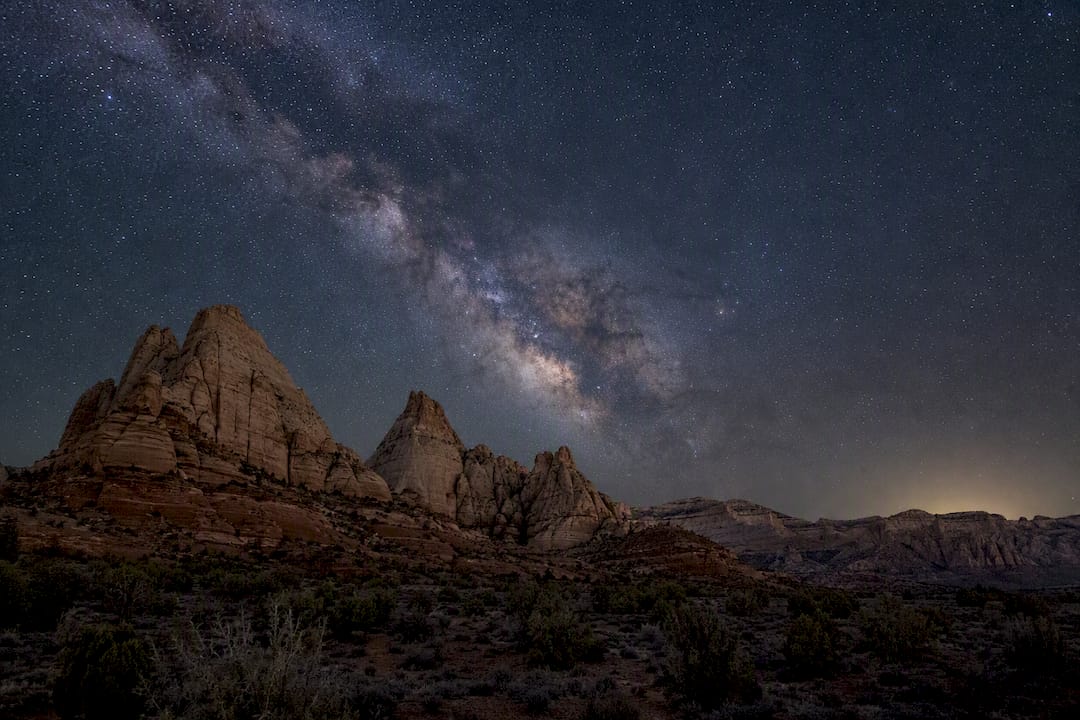
Utah’s certified dark sky zones include Bryce Canyon, Snow Canyon, Goblin Valley, Dead Horse Point, Natural Bridges, Capitol Reef, Antelope Island, and Goosenecks State Park, among others tracked by the Utah Division of State Parks.
Which national park in Utah is best for stargazing?
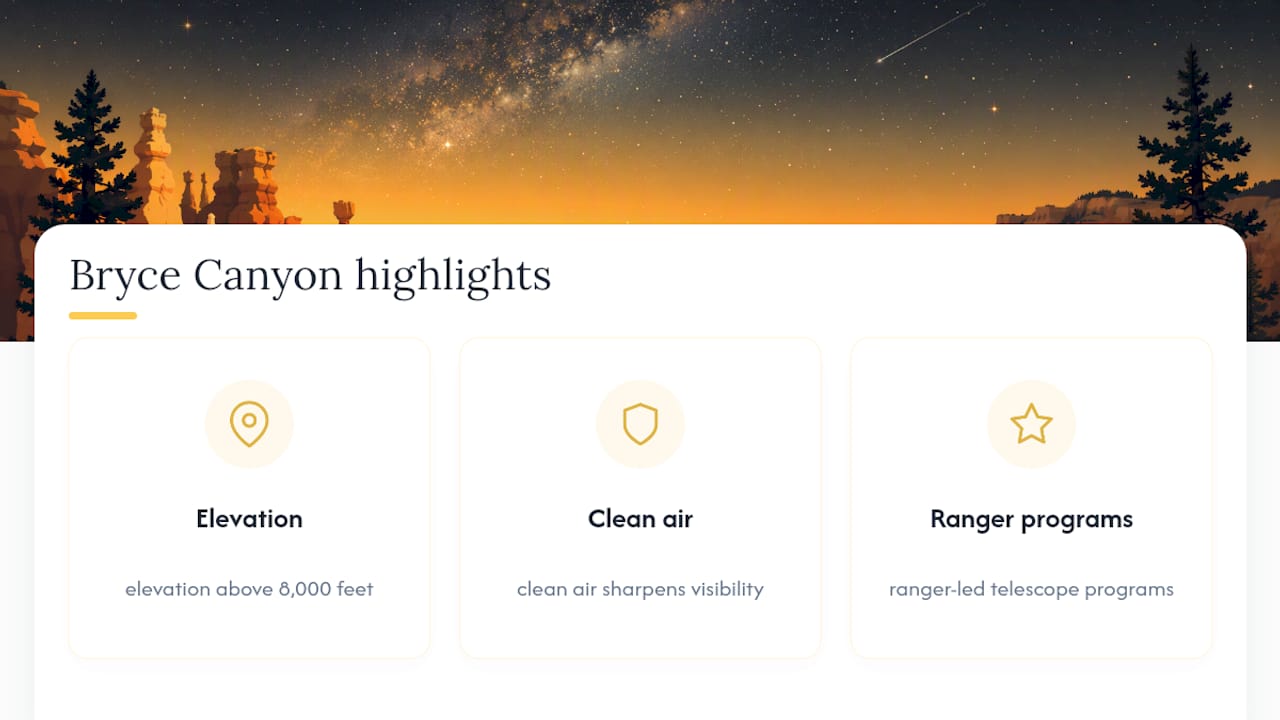
Bryce Canyon National Park is generally considered the top pick, since its elevation above 8,000 feet and clean air sharpen visibility for both naked-eye viewing and ranger-led telescope programs.
Can you see the Milky Way in Utah right now?
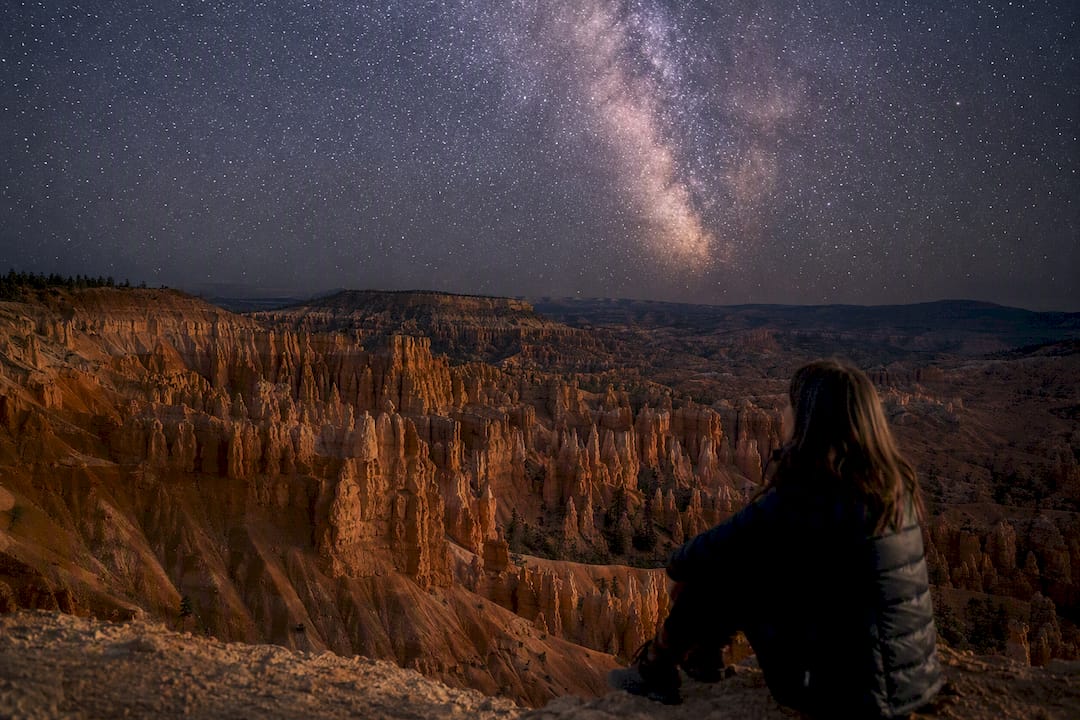
Yes, on clear nights away from city lights, especially during the week around a new moon; summer months typically show the brightest view of the Milky Way’s core.
What is the best time for stargazing in Utah?
The sky is darkest roughly 1.5 hours after sunset until 1.5 hours before sunrise, and pairing that window with a new moon gives you the clearest view of faint stars and deep-sky objects.