For a family or group beach week, check whole-home listings on Vrbo first. For a solo trip, city stay, or something offbeat, start on Airbnb. That single split explains most of what confuses travelers about airbnb vs vrbo, because the two platforms were built for different kinds of trips and not for the same trip at different prices.
Your one next action: price your exact dates on both platforms and compare the full checkout total, not the nightly rate, paying special attention to service fees in charter bookings which can affect the final price significantly. Fees vary depending on the platform and individual host, so the sticker price alone rarely tells the full story.
- Families and groups wanting a full house: start with Vrbo’s whole-home inventory.
- Solo or city travelers wanting flexibility: start with Airbnb’s broader mix of private rooms and unique stays.
- Booking in southern Utah specifically: a direct family rental through Rentalsinstgeorgeutah skips the platform guessing game entirely.
Key Takeaways
The right platform between Airbnb and Vrbo depends on trip type, not brand superiority, and the final checkout total matters more than either platform’s advertised nightly rate.
| Point | Details |
|---|---|
| Match platform to trip type | Choose whole-home listings on Vrbo for families and groups; try Airbnb for solo, city, or unique stays. |
| Compare checkout totals, not nightly rates | Airbnb’s host-only fee and Vrbo’s commission plus processing fees apply differently at final payment. |
| Cross-listing is common | The same property often appears on both platforms with different total fees attached. |
| Host responsiveness beats platform brand | Recent reviews mentioning communication quality predict a smoother stay better than the logo on the booking page. |
| Direct booking skips fee guesswork | Rentalsinstgeorgeutah offers whole-home family rentals in St George without platform-layered service fees. |
Table of Contents
- Airbnb vs Vrbo: The Core Differences at a Glance
- How Do Airbnb and Vrbo Fees Actually Work?
- Where Each Platform’s Inventory Actually Shines
- Which Platform Makes Planning Easier?
- What Happens If You Need to Cancel?
- How to Compare Listings and Book with Confidence
- Why Whole-Home Rentals in St George Fit the Vrbo-Style Traveler
- How Much Does Host Communication Actually Matter?
- Are Airbnb and Vrbo Actually Safe to Book On?
- Which App Is Easier to Use on Your Phone?
- Does Coverage Differ by Region?
- What the Fee Debate Misses
- Skip the Fee Comparison and Book Direct in St George
- Sources
- FAQ
Airbnb vs Vrbo: The Core Differences at a Glance
The fastest way to understand airbnb or vrbo is to look at what each one was actually designed to list. Vrbo has always been whole-home only. It never listed a spare bedroom or a shared bunkhouse, and it still doesn’t. Airbnb grew out of the opposite idea. It started with private rooms in someone’s apartment and expanded from there, so today it lists entire homes, private rooms, and shared spaces side by side, according to NerdWallet’s platform comparison.
That distinction drives almost everything else.
Vrbo tends to win for:
- A week at the beach or lake with extended family
- Ski trips where everyone wants their own room but one shared kitchen
- Multi-generational trips where privacy from other guests matters
Airbnb tends to win for:
- A solo city weekend where a private room beats a full apartment on price
- Remote-work stays in a new city where flexible dates matter more than square footage
- Unique stays (treehouses, converted barns, houseboats) that simply don’t exist on Vrbo
Pro Tip: Don’t assume the brand guarantees quality. Many owners list the same property on both platforms, so a great host with fast replies and recent five-star reviews often matters more than which logo is on the booking page.
Cross-listing changes the calculus more than most travelers realize. Owners who list on both platforms often see higher total booking volume than those who pick just one, since Airbnb tends to generate more inquiries while Vrbo attracts a more decisive, longer-stay booker. That means the exact same house can show up on both sites with different fees attached, so brand loyalty alone won’t get you the better deal.
How Do Airbnb and Vrbo Fees Actually Work?
This is where most travelers get surprised at checkout, and it’s the real answer behind airbnb vs vrbo fees.
- Airbnb’s host-only model involves a host-only fee deducted from payouts, with no separate fee shown to guests. Some hosts still use a split-fee model where guests pay a service fee on top of the nightly rate.
- Vrbo generally charges hosts a commission plus payment processing fees, and guests pay a separate service fee shown at checkout, per Thetraveler.
- Do the math on your actual dates. A $200/night, 4-night city stay on Airbnb might show a lower nightly rate but a bigger jump at checkout if the host still uses split pricing. The same house on Vrbo might show a higher nightly number upfront but a smaller fee added at the end.
The reliable fix is the same every time: compare the final checkout total, including cleaning fees, service fees, and taxes, before you commit. A cheaper nightly rate on one site can flip into the pricier option once every fee lands. This one habit answers airbnb pricing vs vrbo better than any general rule ever could, because fee structure varies host by host, not just platform by platform.
Where Each Platform’s Inventory Actually Shines
Vrbo’s whole-home-only policy means you’ll never end up sharing a hallway with strangers, which is exactly why it dominates traditional vacation markets like beach towns, lake houses, and ski destinations built around family and group travel. If your trip involves more than four people and a kitchen full of groceries, Vrbo’s search results skew toward properties built for that.
Airbnb’s inventory is wider but shallower in any one category. You’ll find entire homes, sure, but also private rooms, converted vans, and stays you can’t categorize at all. That range is a strength for solo travelers and city-hoppers who want flexible dates and don’t need six bedrooms.
- Searching for a lake house that sleeps 12? Vrbo’s filters get you there faster.
- Searching for a $60/night room near downtown for one night? Airbnb has more of those listings.
- Booking in a smaller market? Check both, because inventory gaps are common outside major metro and resort areas.
Pro Tip: When a property is cross-listed, compare the review count and photos on both platforms before booking. Occasionally one listing is outdated while the other reflects a recent renovation.
Which Platform Makes Planning Easier?
Vrbo built Trip Boards specifically for group decision-making. Everyone traveling can save listings to a shared board, comment, and vote, which matters enormously when six adults are trying to agree on one house. Its filters also lean toward group-friendly details: bedroom count, pet policy, and proximity to specific attractions.
Airbnb leans into discovery instead. Category browsing (cabins, treehouses, national park stays) and flexible-date search make it easier to find something interesting when you’re not locked into exact dates or a specific destination.
- Booking as a group of six or more? Vrbo’s Trip Boards cut down the group-text chaos.
- Still deciding where to go? Airbnb’s flexible-date and category search surfaces options you wouldn’t have searched for directly.
- Need a specific amenity like a private hot tub? Both platforms let you filter for it, but Vrbo tends to surface whole-home amenities more prominently since every listing is a full property.
What Happens If You Need to Cancel?
Both platforms offer a range of cancellation policies, from flexible to strict, and the exact terms are set by the individual host, not a platform-wide standard, according to FinanceBuzz’s guest and host comparison. A beachfront Vrbo during peak season might carry a nonrefundable or 60-day cancellation window, while a similar Airbnb listing offers full refunds up to 48 hours out.
- Read the specific policy on the listing, not just the platform’s general reputation, before you book.
- Understand the protection layer. Vrbo’s Book with Confidence Guarantee and Airbnb’s AirCover cover different scenarios, with different limits and exclusions for things like property misrepresentation or trip interruption.
- Buy trip insurance for expensive stays. Neither guarantee fully replaces travel insurance for a five-figure family vacation booked months in advance.
How to Compare Listings and Book with Confidence
Use the same process every time, regardless of which platform you land on.
- Lock your dates first. Fees and availability shift constantly, so a vague date range makes comparison useless.
- Pull up comparable listings on both platforms for the same location and guest count.
- Compare full checkout totals, not nightly rates, factoring in cleaning fees and taxes.
- Read the most recent reviews, specifically ones mentioning host communication and property accuracy.
- Confirm logistics and the cancellation window before entering payment details.
- Book directly once the total, host, and policy all check out.
| Decision Factor | Why It Matters |
|---|---|
| Final checkout total | The only number that reflects what you’ll actually pay after fees and taxes |
| Host responsiveness | Fast, clear replies predict a smoother check-in and stay |
| Privacy needs | Whole-home listings avoid shared walls with strangers |
| Cancellation terms | Determines your flexibility if plans change |
| Amenity fit | Full kitchens and laundry matter more for longer or family stays |
Privacy and final price usually outweigh brand preference once you’ve done this comparison honestly. A great host on either platform beats a mediocre one with better branding.
Why Whole-Home Rentals in St George Fit the Vrbo-Style Traveler
If you’re the type of traveler drawn to Vrbo’s whole-home model, whether for the extra bedrooms, the full kitchen, or simply not wanting to share a wall with strangers, Rentalsinstgeorgeutah delivers exactly that experience directly.
- Spacious, family-friendly homes with private patios and plush bedding
- Fully equipped kitchens and modern amenities built for longer group stays
- Proximity to Zion National Park and regional adventure excursions
- Direct customer support and a straightforward booking process without platform fee guesswork
How Much Does Host Communication Actually Matter?
More than most travelers expect. Frequent renters treat host responsiveness and recent reviews as a stronger predictor of a smooth stay than the platform itself, and for good reason: a host who answers questions within an hour and provides clear check-in instructions prevents the vast majority of vacation rental headaches before they start.
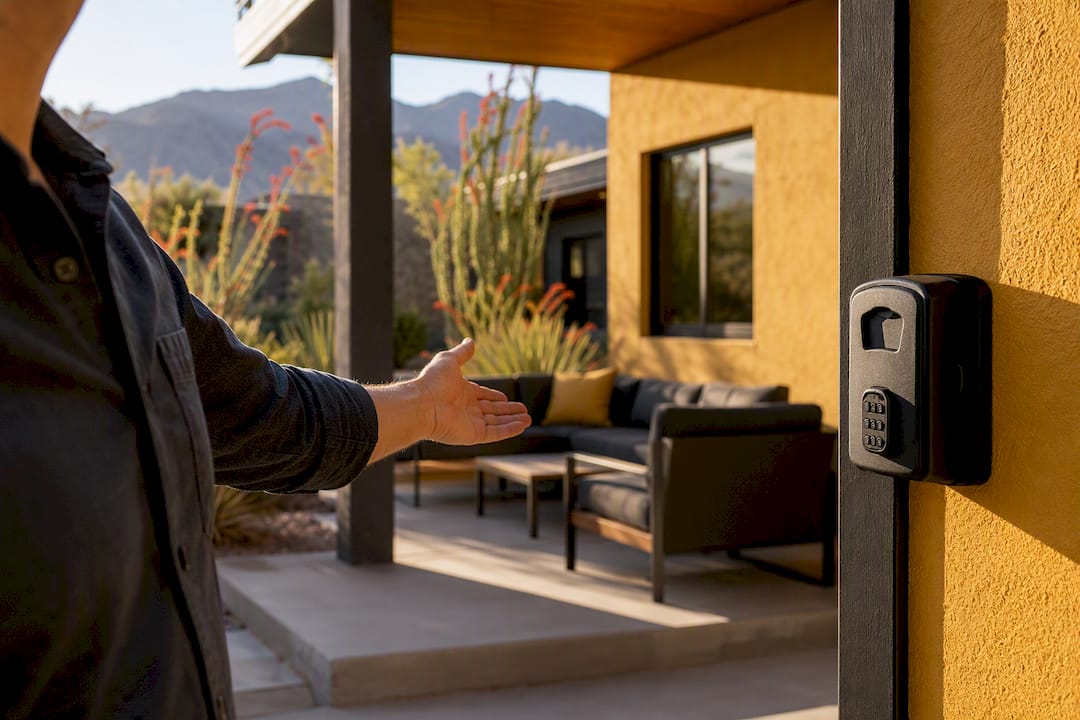
Slow or vague hosts are also the common thread behind most vacation rental scams. A legitimate host will answer specific questions about the property, parking, or check-in process without dodging them. If a listing’s messages feel scripted, generic, or evasive when you ask something specific, that’s a signal worth taking seriously before you send payment.
This matters equally on Airbnb and Vrbo, since both platforms host a mix of professional property managers and individual owners. The platform doesn’t screen for communication quality. Reading the last 10 to 15 reviews, specifically for mentions of responsiveness, check-in ease, and accuracy of the listing description, tells you more than the overall star rating.
For travelers booking direct with a company rather than an individual owner, this uncertainty mostly disappears. A dedicated booking team answers consistently because responsiveness is the job, not a side effect of one person’s schedule. That’s part of why direct booking services built around guest support, rather than a marketplace of independent hosts, appeal to families who’ve been burned by a slow reply once before.
Are Airbnb and Vrbo Actually Safe to Book On?
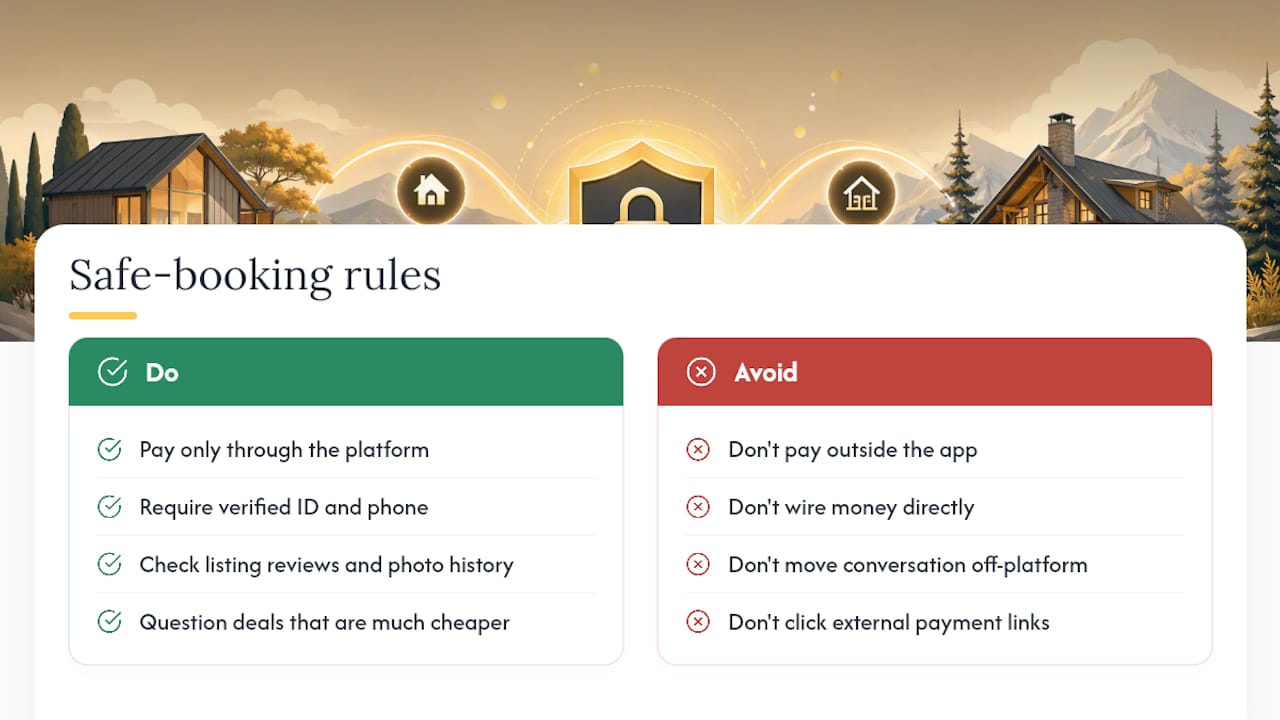
Both platforms verify identity and hold payments through their own systems rather than letting guests wire money directly to a host, which is the single biggest protection against vacation rental scams. Payment stays on-platform until check-in triggers the release of funds, so a guest who never sends money outside the app is largely protected from the classic “the listing didn’t exist” scam.
Identity verification requirements have tightened on both platforms in recent years, typically requiring a government ID and a verified phone number before a guest can book or a host can list. Neither system is foolproof. The most common way travelers still get burned is by being convinced to communicate or pay outside the platform, usually through a discount offer that sounds too easy.
The rule for how to avoid vacation rental scams is simple and holds regardless of platform: never pay outside the app, never wire money directly, and be suspicious of any host who pushes you toward a phone call or a separate payment link. If a deal seems significantly cheaper than every comparable listing nearby, verify the listing’s reviews and photo history before committing rather than assuming it’s simply a lucky find.
Which App Is Easier to Use on Your Phone?
Airbnb’s app leans into visual discovery, with map-based browsing and swipeable categories that make idle scrolling genuinely enjoyable, which fits its role as a place people browse before they’ve committed to a destination. Vrbo’s app is more utilitarian, built around specific search filters (bedroom count, pet policy, whole-home only) rather than inspiration browsing.
For active trip planning, meaning you already know your dates and destination, Vrbo’s filter-heavy approach gets you to a shortlist faster. For open-ended browsing, meaning you’re deciding where to go at all, Airbnb’s app format works better. Both apps support in-app messaging, digital check-in instructions, and payment management, so neither has a functional gap that would make or break a booking once you’ve found the right listing.
Does Coverage Differ by Region?
Airbnb operates in far more countries and smaller markets than Vrbo, which built its reputation and inventory primarily around North American, European, and established vacation destinations like beach towns and ski regions. If you’re traveling somewhere off the beaten path internationally, Airbnb is more likely to have any listing at all.
Within well-established vacation rental markets, particularly beach, lake, and mountain destinations across the United States, Vrbo’s whole-home inventory density often rivals or beats Airbnb’s, since that’s the market Vrbo was purpose-built to serve. Southern Utah is a good example. Search both platforms for a house near Zion, and you’ll typically find whole-home options on Vrbo that compete directly with Airbnb’s broader but less specialized listings.
The practical takeaway: check both platforms if you’re headed somewhere remote or international. Stick with whichever fits your group size if you’re headed to an established vacation market where both platforms are well stocked.
What the Fee Debate Misses
Most articles comparing airbnb vs vrbo treat this like a scoring contest with one platform winning outright. That framing misses the point entirely. The research on fee structures, inventory, and cross-listing behavior all points the same direction: this decision is trip-dependent, not universal.
The conventional advice tells travelers to just check both platforms and pick whichever is cheaper that week. That’s incomplete. Fee structure varies by individual host, not just by platform, so a “cheaper on Vrbo” rule of thumb will burn you on the listing where the host still uses Airbnb’s older split-fee model with a lower nightly rate.
What actually matters is sequencing: identify what your trip needs first (privacy, room count, location type), then compare checkout totals across whichever platforms have that inventory. For families wanting a full house near a destination like Zion, that sequence points toward whole-home rentals from the start, whether that’s a Vrbo listing or a direct booking with a company built specifically around family-sized homes. Skipping the platform comparison entirely and booking direct isn’t a shortcut. For the right trip type, it’s the more efficient path.
Skip the Fee Comparison and Book Direct in St George
Here’s the advantage nobody mentions when they’re weighing Airbnb against Vrbo: neither platform’s fee structure applies when you book directly with the property owner. There’s no split-fee guessing game, no host-only percentage buried in the nightly rate, and no separate guest service fee tacked on at checkout. What you see is closer to what you pay.

Rentalsinstgeorgeutah specializes in exactly the kind of trip that sends most travelers to Vrbo in the first place: whole-home, family-friendly rentals with private patios, full kitchens, and plush bedding, all within easy reach of Zion National Park and the area’s best adventure excursions. Our team handles booking support directly, so questions get answered by people who know the property, not a rotating cast of independent hosts. If your next trip means a full house for the family rather than a shared room in a stranger’s condo, browse available vacation homes in St George and check real-time availability for your dates today.
Sources
- Airbnb vs. Vrbo: Which is better for travelers? — NerdWallet
- Thetraveler
- Airbnb vs VRBO for Owners: 2026 Fee & Revenue Guide — Awning
FAQ
What is the 80/20 rule for Airbnb?
It generally refers to the idea that roughly 80% of an owner’s bookings often come from a small share of top-performing listings or peak-season dates, though this varies widely by market and isn’t a fixed platform rule.
Are Airbnb fees higher than Vrbo?
It depends on the host’s fee model. Airbnb’s host-only structure runs around 15.5% for many PMS-connected listings, while Vrbo typically charges hosts about 5% plus 3% processing, but guest-facing fees vary enough that comparing final checkout totals is the only reliable method.
Why are listings cheaper on Vrbo than Airbnb?
Vrbo’s lower host commission (around 5% plus processing) compared to Airbnb’s host-only fee (around 15.5%) can translate into a lower nightly rate for the same property, though guest-side service fees still affect the final total.
Why are people leaving Airbnb?
Rising guest-side fees and inconsistent quality across listings have pushed some travelers toward whole-home platforms like Vrbo or direct booking services for more predictable pricing and amenities.
Is it cheaper to book direct instead of through Airbnb or Vrbo?
Often, yes, because direct bookings skip the platform’s guest service fee and host commission layered into the price. Rentalsinstgeorgeutah’s vacation homes in St George show pricing without those added platform fees.
Recommended
- Best Vacation Rental Sites in the US for 2026 – rentalsinstgeorgeutah.com
- Best Airbnb Alternatives in 2026: Top Sites to Try Instead – rentalsinstgeorgeutah.com
- Cheapest Vacation Rental Sites in 2026: Where to Book for Less – rentalsinstgeorgeutah.com
- How to Save Money on Vacation Rentals in 2026: Top Tips and Tricks – rentalsinstgeorgeutah.com