
Your Gateway to Serene St. George and Santa Clara Utah Escapes

What’s Covered on This Page
- What Counts as a Normal Vacation Rental Fee
- Cleaning Fees: Why They Vary by Property
- Service and Booking Fees Explained
- When should you contact the host instead of just accepting a fee?
- What’s the biggest misconception guests have about vacation rental fees?
- Does Santa Clara require vacation rentals to charge a lodging tax?
- Why does the cleaning fee change from one Santa Clara rental to another?
- Is a damage deposit the same thing as a cleaning fee?
- What should you do if a Santa Clara listing shows too many extra fees?
What Counts as a Normal Vacation Rental Fee
Here’s the thing about fees. They’re not all bad, and they’re not all sketchy add-ons designed to pad a bill. A cleaning fee, for example, pays for someone to deep clean the home after you leave. That’s real labor, real time, real supplies. We’ve walked through plenty of turnovers ourselves, and a proper reset between guests takes hours, not minutes.
So what should you expect to see on a Santa Clara rental invoice? Most listings break costs into a few standard buckets. Once you know these, you can scan any booking page in under a minute and know if something looks off.
- Cleaning fee: covers laundering sheets and towels, sanitizing surfaces, and prepping the home for the next guest
- Damage deposit: a refundable hold in case something gets broken or the home needs extra repair work
- Service or booking fee: charged by some platforms to cover payment processing and customer support
- Pet fee: applies if you’re bringing an animal, since pet stays often mean extra cleaning
- Local occupancy tax: a government charge, not something the host keeps
Notice what’s missing from that list? Anything vague. If a fee doesn’t fit one of those categories, it’s worth asking about before you book. We see this mistake all the time, guests get excited about a listing, skip the fee breakdown, and end up surprised later.
A quick scenario. Say you’re booking a two-bedroom home in Santa Clara for a long weekend. The nightly rate looks great, but the checkout page adds a cleaning fee and a damage deposit. That’s normal, and it’s a sign the host runs things properly. But if you spot three or four extra line items with no explanation, that’s your cue to pause and ask questions.
Local occupancy taxes are worth a mention too. Santa Clara, like most cities, requires short-term rentals to collect a lodging tax on stays. This isn’t something the property owner pockets, it goes straight to the city. So don’t confuse it with a junk fee, it’s just part of renting anywhere legally.
See our rental listings
Cleaning Fees: Why They Vary by Property
If you’ve booked more than one Santa Clara vacation rental, you’ve probably noticed the cleaning fee isn’t the same twice. That’s not random. Cleaning fees change based on the size of the home, how many bedrooms and bathrooms need attention, and what kind of turnover work the space requires between guests.
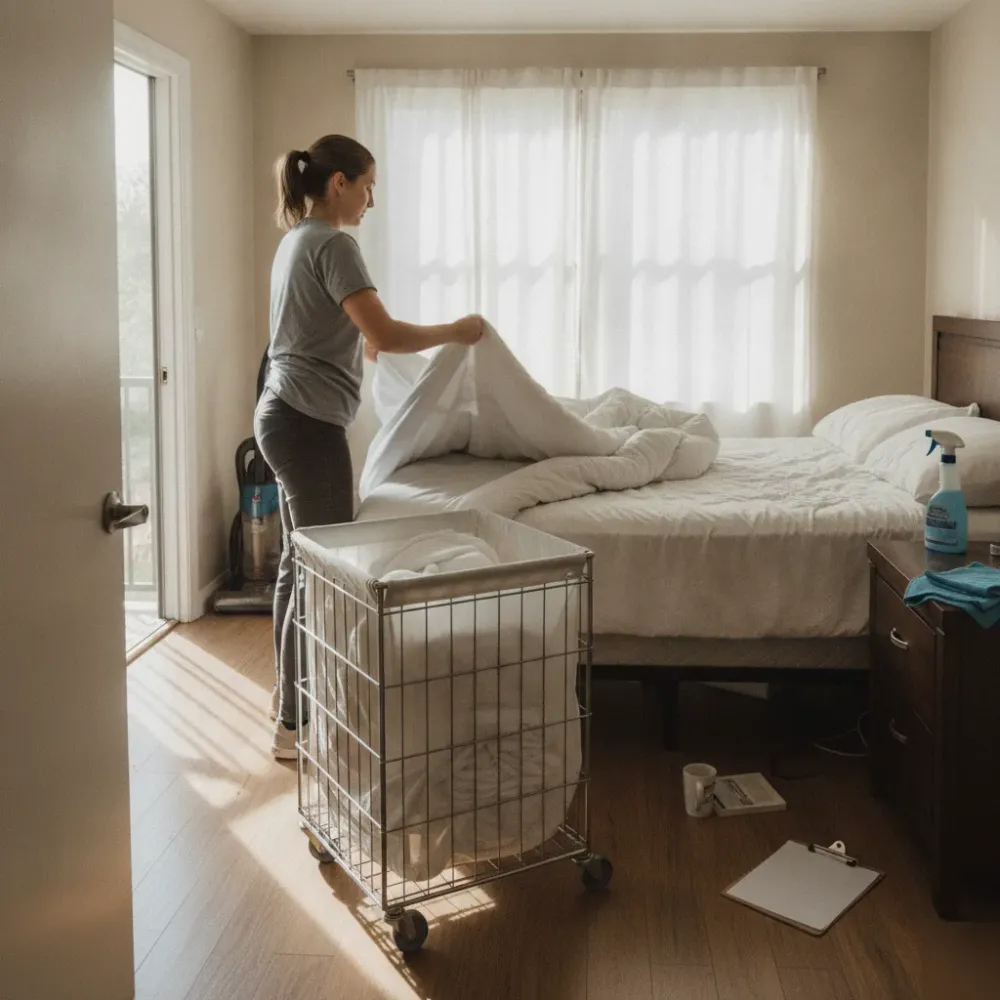
A cozy one-bedroom casita takes far less time to clean than a five-bedroom home with a private pool and outdoor kitchen. So the fee reflects that. We see this mistake all the time – guests assume every rental charges the same flat rate, then get surprised when a bigger property costs more to turn over.
- Square footage and bedroom count – more rooms mean more labor hours
- Outdoor spaces like patios, pools, or desert landscaping that need tidying
- Linen and towel counts, since larger groups use more of both
- Special surfaces like tile, stone counters, or hot tubs that need extra care
- Post-stay damage checks and restocking of basics like soap and paper towels
There’s also the type of stay itself. A weekend visit and a two-week stay don’t leave the same mess behind, most hosts build that into how they price the fee rather than charging per night.
Here’s a scenario we run into often. A family books a three-bedroom home in Santa Clara for a long weekend, expecting the same cleaning fee as a smaller condo they stayed at last year. But the home has a private yard, an outdoor grill, and two extra bathrooms. The fee is higher because someone has to physically clean all of it before the next guest arrives. That’s not padding the bill – it’s the real cost of turning a home around properly.
And here’s something guests don’t always realize: a higher cleaning fee often signals a more thorough turnover process, not a markup. Homes with detailed cleaning checklists, fresh linens every stay, and sanitized high-touch surfaces tend to charge more because the work behind the scenes takes longer.
Curious how cleaning fees stack up against other charges you might see before you book?
Service and Booking Fees Explained
You’ve picked your dates near Santa Clara. The home looks perfect, the photos show red rock views right out the back window. Then you get to checkout and see a stack of fees you didn’t expect. We hear this a lot from guests booking their first desert getaway.

Most of these charges aren’t random. They cover real work behind the scenes. And once you know what each one does, the whole booking process feels a lot less confusing.
- Cleaning fee: pays for a deep clean of the whole home before you arrive, not just a quick wipe-down
- Service fee: covers the booking platform’s cost of processing payments, handling support, and hosting listings
- Booking fee: a flat charge added once per reservation, separate from your nightly rate
- Damage protection fee: covers minor accidental damage during your stay, like a broken glass or scuffed wall
- Local occupancy tax: collected on behalf of the city or county, not kept by the host
Here’s a scenario we see often. A family books a three-night stay for a hiking trip near the trailheads outside Santa Clara. The nightly rate looks great, so they book fast. At checkout, the total jumps because of the cleaning fee and service fee stacked on top. They call confused, thinking they got overcharged.
But once we walk through the receipt line by line, it makes sense. The cleaning fee paid for a professional turnover between guests. The service fee covered the platform that handled their payment securely. Nothing was hidden, it just wasn’t explained up front.
This is exactly why reading the full fee breakdown before you confirm a stay matters so much.
A few things worth checking before you hit confirm:
- Does the listing show a total price, or just the nightly rate?
- Is the cleaning fee flat, or does it change with the length of stay?
- Are taxes included in the quoted total, or added at the final step?
Some guests skip these questions and end up surprised later. Others ask right away and book with confidence. That second group tends to have a smoother trip, plain and simple.
See vacation rental management details
Fees exist for a reason, they just need to be visible before you book, not after.
Frequently Asked Questions
Common questions about Common Vacation Rental Fees in 2026: What to Expect Before You Book
When should you contact the host instead of just accepting a fee?
You should contact the host anytime a fee looks vague or isn’t explained on the listing. A cleaning fee, damage deposit, or occupancy tax are all normal and don’t need a conversation. But if you see three or four unlabeled charges, or a fee that doesn’t match the size of the home, ask before you pay. Most hosts in Santa Clara will explain the breakdown quickly. If they can’t, that’s a sign to keep looking at other options before you commit to the booking.
What’s the biggest misconception guests have about vacation rental fees?
The biggest misconception is that all fees are hidden markups meant to pad the bill. In reality, most charges cover real work like laundering linens, sanitizing surfaces, and resetting a home between guests. A higher cleaning fee often means a more thorough turnover, not a scam. Guests who skip the fee breakdown before booking are the ones who get surprised later. Learning what’s normal ahead of time makes the whole process feel a lot less confusing.
Does Santa Clara require vacation rentals to charge a lodging tax?
Yes, short-term rentals in Santa Clara are required to collect a local occupancy tax on stays. This charge goes to the city, not the property owner, so it’s not something a host pockets or marks up. Think of it the same way as a hotel tax you’d see anywhere else. Don’t confuse this line item with a junk fee. If you’re comparing listings, check our rental listings to see how this tax typically appears on a Santa Clara checkout page.
Why does the cleaning fee change from one Santa Clara rental to another?
The cleaning fee changes based on the size of the home and how much work it takes to turn it over between guests. A small one-bedroom casita takes far less time to clean than a five-bedroom home with a pool and outdoor kitchen. Bedroom count, outdoor spaces, and special surfaces like stone counters or hot tubs all add labor hours. That’s why two listings with similar nightly rates can show very different cleaning fees. It reflects real work, not random pricing.
Is a damage deposit the same thing as a cleaning fee?
No, a damage deposit and a cleaning fee cover two different things. The cleaning fee pays for laundering linens and resetting the home. The damage deposit is a refundable hold in case something breaks or the home needs extra repair after your stay. If nothing gets damaged, you typically get that deposit back. Knowing the difference helps you read a checkout page faster and spot which charges are routine versus which ones protect the host’s property.
What should you do if a Santa Clara listing shows too many extra fees?
You should pause and ask the host to explain each charge before booking. A cleaning fee, damage deposit, service fee, and local tax are all standard and expected. But three or four extra line items with no description is a sign something’s off. Comparing the fee guide against what’s charged can help you spot the difference quickly, so you know exactly what you’re paying for before you confirm a reservation near Santa Clara.