Canyon Trail Rides is the National Park Service’s authorized concessioner for horseback riding inside Zion National Park, running 1-hour and 3-hour guided rides from mid-March through October 31 each year. For sunset trips, half-day adventures, or overnight pack rides, East Zion Adventures and Zion Ponderosa Ranch Resort round out the best near-park options. Check the season dates, confirm age and weight limits, then book online or call ahead, especially for last-minute openings.
TL;DR:
- Only one authorized in-park horseback ride operation exists, but many near-park options offer more diverse ride lengths and themes suitable for different experience levels.
- Short rides like the 1-hour Virgin River trip are ideal for beginners, while the 3-hour Sandbench trail demands more physical effort and provides panoramic views.
- Booking early, arriving 20 to 30 minutes before your scheduled ride, and confirming safety and cancellation policies ensure a smooth experience, especially during busy seasons.
- Weather and season significantly impact ride availability and safety, with summer heat requiring early slots and spring or fall offering more comfortable conditions.
- Riders with mobility limitations or safety concerns should contact operators in advance to discuss accommodations, weight limits, and support options.
Table of Contents
- Best Horseback Riding Options Near Zion National Park
- What to Expect on Different Ride Lengths
- How to Choose and Book Your Zion Horseback Ride
- Zion Park Rules and Safety Essentials for Riders
- Staying in St. George Makes Ride-Day Logistics Easier
- Where to Check In and How Early to Arrive
- Accessibility for Riders With Disabilities
- Cancellation and Refund Policies to Know Before You Book
- Tips for First-Time Riders on Zion’s Terrain
- Host Note: Coordinating Rides and Stays From St. George
- Book Your St. George Base Before Your Zion Ride
- Where to Confirm Details and Book Directly
- Sources
- FAQ
Best Horseback Riding Options Near Zion National Park
If you want to ride inside the park itself, you have exactly one authorized option: Canyon Trail Rides holds the concessioner contract with the National Park Service. Everyone else operates on private or adjacent land outside park boundaries, which is not a downgrade. It’s a different experience, often with more flexibility on ride length, themes, and group size.
The comparison below lays out how the major operators stack up on the factors that actually shape your decision: how long you’ll be in the saddle, what it costs, and who each ride suits best.
A few standouts worth knowing before you compare prices line by line:
- The 1-hour Virgin River ride from Canyon Trail Rides passes the Court of the Patriarchs viewpoint, an easy, scenic option for first-timers or families with young kids.
- The 3-hour Sandbench Trail climbs roughly 500 feet to a panoramic overlook, a step up in physical demand but a real reward in the view.
- East Zion Adventures runs sunset rides that end with s’mores, a nice option for couples or groups wanting something more relaxed than a straight trail ride.
- Zion Ponderosa’s overnight pack trips let you pair a ride with a multi-night stay on the resort’s own property, useful if you’re building a longer Zion itinerary.
What to Expect on Different Ride Lengths
Ride length in Zion isn’t just about time. It determines terrain, fitness demands, and what you should wear. Matching the right ride to your group avoids the classic mistake of booking a 3-hour trail for a family that just wanted an easy hour on horseback.
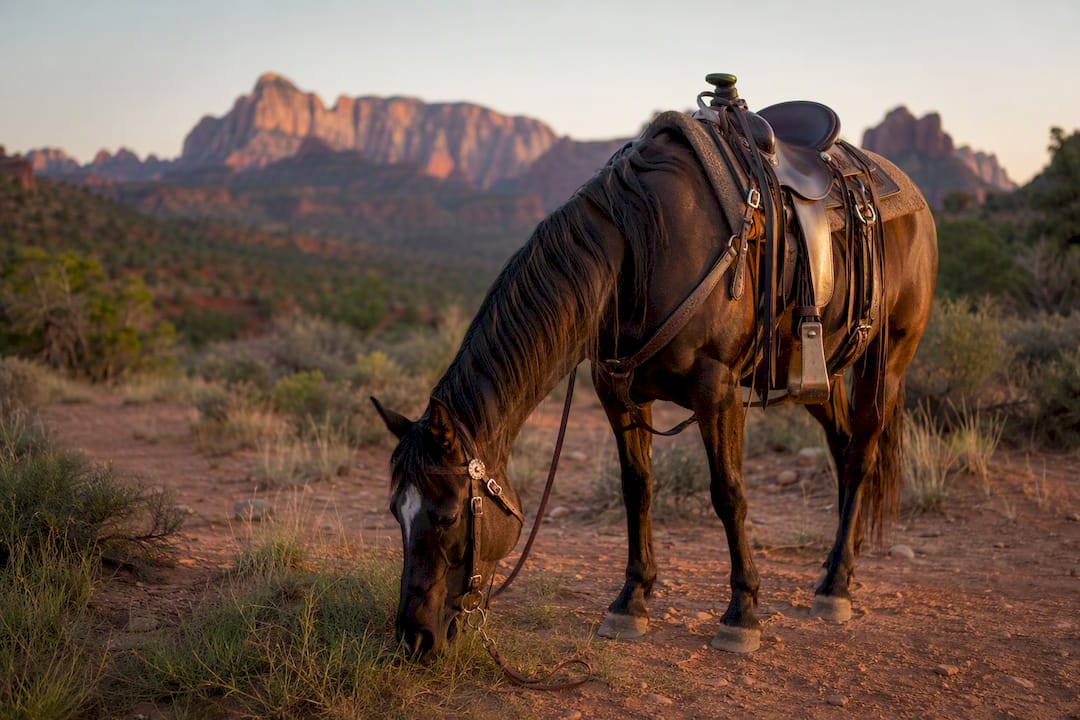
The 1-hour Virgin River ride through Canyon Trail Rides is gentle and mostly flat, following the river with views toward the Court of the Patriarchs. It’s a solid pick for first-time riders, young kids, or anyone short on time. The 3-hour Sandbench ride is a different animal: it climbs about 500 feet to a panoramic overlook, which means more time in the saddle, more sun exposure, and a genuine need for closed-toe shoes and a hat.
Near-park operators expand the menu considerably. Expect:
- Sunset rides with s’mores at the end (East Zion Adventures)
- Family-oriented short rides suited to younger or nervous riders
- Half-day and full-day backcountry trips for experienced riders wanting more distance
- Overnight pack trips through Zion Ponderosa, often bundled with lodging
Most operators set minimum age and weight limits for rides, varying by ride length and provider, with common restrictions to ensure rider and horse safety. No prior riding experience is required for the standard trail rides, though longer backcountry trips may ask about your comfort level beforehand.
Pro Tip: If you’re not sure which length to book, start shorter. A 1-hour ride tells you and your kids whether you enjoy it before you commit to a 3-hour saddle session in July heat.
How to Choose and Book Your Zion Horseback Ride
Booking a ride is straightforward once you know what to check first. Work through these priorities before you call or click “reserve.”
- Decide in-park vs. near-park. In-park rides through Canyon Trail Rides mean you’re inside Zion’s boundaries; near-park operators offer more variety in length and theme.
- Match ride length to your group’s stamina and schedule, especially with kids or older riders.
- Check terrain and season. Summer heat on the Sandbench climb is a real factor; spring and fall are more comfortable.
- Confirm family-friendliness, including minimum ages and whether double-riding with small children is allowed.
- Read the cancellation policy before you pay, since online bookings can carry non-refundable terms.
When you call or book online, ask the operator directly:
- What’s included in the price (helmet, water, photos)?
- How are horses assigned, and is there a safety briefing beforehand?
- What’s the weather cancellation policy?
- Is gratuity expected, and how much is typical?
Red flags worth avoiding: operators with no listed safety briefing, no clear weight limit, or vague answers about refund policy if weather cancels your ride.
Zion Park Rules and Safety Essentials for Riders
Canyon Trail Rides operates under a formal concessioner agreement with the National Park Service, and its guided rides run from mid-March through October 31 each year. Outside that window, in-park guided rides aren’t offered.
If you’re bringing your own horse or pack animal rather than booking a guided ride, the National Park Service sets specific rules. Overnight stock camping is limited to Hop Valley Site A, and it requires a wilderness permit. Animals must eat certified weed-free hay to prevent introducing invasive plant species, and group size for private stock tops out at six animals.
Before any ride, in-park or near-park:
- Wear closed-toe shoes and layers; desert temperatures swing fast between morning and afternoon
- Carry water, even on a 1-hour ride
- Stay on marked trails to protect fragile desert vegetation
- Know that Zion is home to venomous snakes, including the Great Basin rattlesnake. Stay alert on rocky, brushy sections and keep hands and feet away from areas you can’t see into.
Staying in St. George Makes Ride-Day Logistics Easier
St. George sits roughly 45 minutes from Zion’s south entrance, close enough that you can catch an early ride without the pre-dawn wake-up call a farther base would require. It’s also a practical hub if you’re stacking horseback riding with other Zion activities, slot canyon hikes, or a day at the park’s main trails.
A few things that make ride-day mornings smoother:
- Book rides for mid-morning if you’re not an early riser. Afternoon slots run hotter, especially in summer.
- Leave valuables and bulky gear at your rental rather than hauling them to the trailhead.
- Pack riding layers the night before. Digging through luggage at 6 a.m. is nobody’s favorite start to vacation.
Rentalsinstgeorgeutah’s guest tips and stories page covers more of these small logistics decisions if you’re planning a longer Zion stay.
Where to Check In and How Early to Arrive
Meeting locations vary by operator, and showing up at the wrong spot can cost you your ride slot. For Canyon Trail Rides, check-in happens at the Emerald Pool trailhead parking area inside the park, not at a visitor center or lodge. Near-park operators typically have their own private staging areas, so confirm the exact address when you book rather than assuming it’s inside Zion’s boundaries.
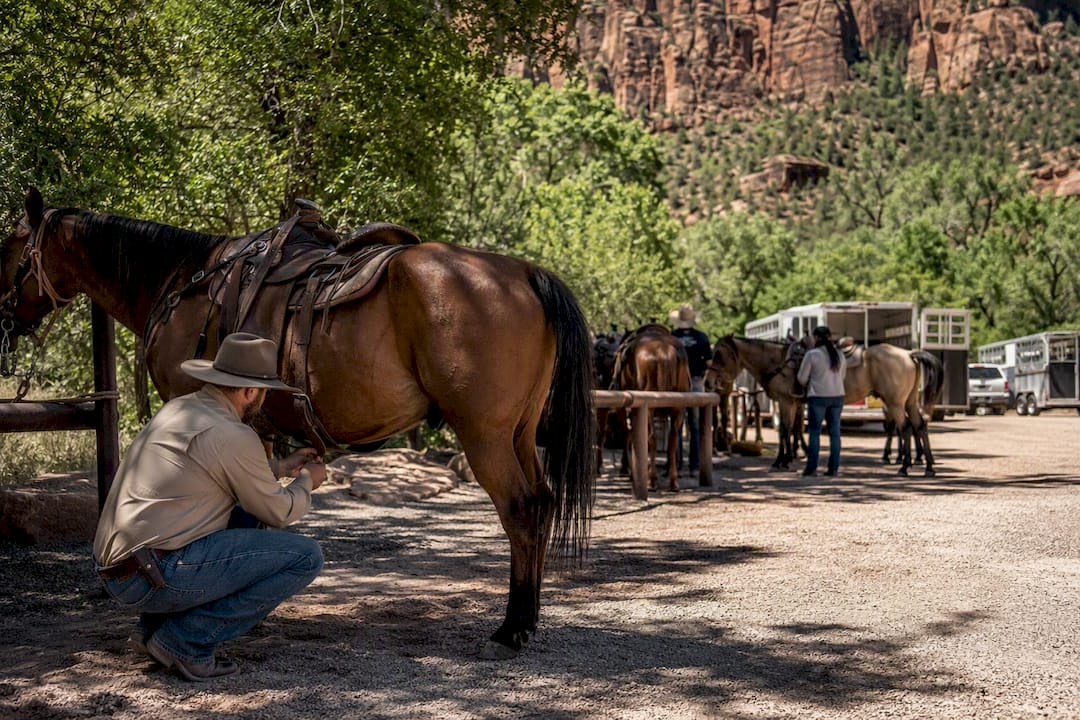
Plan to arrive at least 20 to 30 minutes before your scheduled departure. That window covers paperwork, waiver signing, and getting matched with a horse suited to your height, weight, and experience level. Arriving late doesn’t just risk an awkward scramble. Many operators run tight schedules back to back, so a late arrival can mean forfeiting your slot entirely.
Parking fills up fast at popular trailheads during peak season (late spring through early fall), so give yourself extra buffer time if you’re driving in from St. George or another nearby town. If you’re staying at a vacation rental, map your route the night before. Zion’s shuttle system doesn’t serve the horseback riding meeting points, so you’ll need your own vehicle or a ride-share arrangement.
Once you check in, expect a short safety briefing covering basic riding commands, what to do if your horse stops to eat trailside grass (a common and harmless occurrence), and how the group will be paced on the trail. This briefing is your chance to mention any physical concerns, past riding experience, or nervousness. Guides use that information to assign horses and positioning within the group.
Accessibility for Riders With Disabilities
Horseback riding inherently requires a certain baseline of mobility. Riders need to mount, sit upright independently, and grip the reins, which limits accessibility compared to many other Zion activities. That said, options exist for riders with limited mobility or other physical considerations.
Call ahead, well before your trip, if you or someone in your group has a mobility limitation, chronic condition, or disability that might affect riding. Operators can discuss mounting assistance, whether a mounting block or ramp is available, and whether staff can provide extra support getting on and off the horse. Some near-park operators are more flexible on this front than the in-park concessioner, simply because their facilities and staffing are set up differently.
Weight limits (typically around 220 pounds) apply for the horse’s welfare and are generally firm across operators, since ill-fitting rides can injure the animal, not just create discomfort for the rider. If weight limits are a concern, ask specifically whether larger horses are available. Some ranches keep a few draft or draft-cross horses for exactly this reason.
Riders with visual or hearing impairments should mention this at booking so guides can adjust how they communicate trail instructions. Service animals typically cannot accompany riders on horseback for safety reasons, though operators can usually arrange care for a service animal during the ride. None of the operators covered here publish formal ADA-specific horseback programs, so a direct phone call remains the most reliable way to get accurate answers for your specific situation.
Cancellation and Refund Policies to Know Before You Book
Cancellation terms vary by operator, and this is one area where reading the fine print before you pay actually matters. Canyon Trail Rides and similar operators often set specific windows for refunds or credits, and online bookings can carry stricter terms than a phone reservation would.
Weather is the most common reason rides get canceled outright, particularly in Zion’s flash-flood-prone canyon terrain. Most operators will offer a full refund or reschedule if they cancel a ride due to weather or trail conditions. If you cancel on your end, though, refund policies get less generous the closer you are to your ride date.
A practical approach: book directly through the operator’s own website or by phone rather than a third-party booking aggregator, since operator-direct bookings tend to have clearer, more flexible cancellation terms. Ask specifically about the refund window when you book. Common structures include full refunds up to 48 or 72 hours out, with partial credit or no refund inside that window. Since terms differ operator to operator and can change season to season, confirm the current policy at the time you book rather than relying on what a previous guest experienced.
If you’re booking during peak season (spring and fall weekends especially), consider that some operators sell out days or weeks ahead. A firm cancellation policy that seems restrictive is often the flip side of high demand. Slots that open up from other cancellations get snapped up fast.
Tips for First-Time Riders on Zion’s Terrain
Zion’s desert terrain rides differently than a flat pasture trail ride you might have done elsewhere. Sand, loose rock, and elevation changes on routes like Sandbench mean your horse is doing more work, and you’ll feel that in how the ride moves.
A few things that help first-timers specifically:
- Wear long pants, even in summer heat. Saddle friction on bare legs gets uncomfortable fast over an hour or more.
- Closed-toe shoes with a slight heel are ideal. Sandals or flip-flops are a real safety risk around stirrups.
- Bring sunscreen and a hat with a chin strap. Zion’s canyon walls offer some shade, but exposed stretches add up.
- Listen closely during the safety briefing, especially about how to signal your horse to stop or slow down.
- If you’re nervous, say so at check-in. Guides routinely place newer riders on calmer horses and position them closer to the front or back of the group where guides can keep a closer eye.
Heat is the biggest first-timer miscalculation. Southern Utah summers regularly push past 100 degrees by midday, and horseback riding at that hour is a different experience than an early morning trail ride. Booking the earliest available slot, especially May through September, makes a real difference in comfort.
Host Note: Coordinating Rides and Stays From St. George
Guests staying with us often ask the same handful of questions: how far is the drive to the trailhead, should they book the ride before or after arrival, and can they leave gear at the rental during the ride. We keep flexible check-in windows specifically so early ride departures don’t collide with a rigid check-in time, and we’re happy to walk through parking and timing logistics before your trip.
If you’re planning a Zion horseback ride alongside your stay, reach out with your questions. Local timing quirks, seasonal trail conditions, and which entrance makes sense for your route are all things we can help sort out ahead of time.
— Jacob
Book Your St. George Base Before Your Zion Ride
Your horse doesn’t care where you slept, but you will. A spacious rental near St. George gives your group room to sort gear, rinse off trail dust, and relax after a morning in the saddle. That matters more than it sounds like, especially with kids or a full carload of hiking and riding equipment.

A few practical advantages of booking with Rentalsinstgeorgeutah for your Zion trip:
- Full kitchens mean you can pack a trail lunch instead of scrambling for food near the trailhead
- Private patios and multiple bedrooms give groups room to spread out after a long ride day
- Flexible check-in options that work around early morning departure times for horseback tours
Browse vacation homes in St. George and lock in a place with the space and flexibility your Zion adventure actually needs, then check current availability for your travel dates.
Where to Confirm Details and Book Directly
For the most current season dates and park rules, go straight to the National Park Service’s horseback riding page. To book an in-park ride, visit Canyon Trail Rides directly. For near-park alternatives, check East Zion Adventures for sunset and family rides, or Zion Ponderosa Ranch Resort if you’re combining a ride with a multi-night stay. If your Zion trip extends into a broader regional itinerary, Grand Canyon Journeys offers pickup-based tours worth a look.
FAQ
Is There Horseback Riding at Zion National Park?
Yes. Canyon Trail Rides is the park’s official concessioner, offering 1-hour and 3-hour guided rides from mid-March through October 31 each year.
Are There Venomous Snakes in Zion?
Yes, including the Great Basin rattlesnake. Stay on marked trails, watch where you step in rocky or brushy areas, and keep hands and feet out of spots you can’t see into.
What Should I Do in Zion if I Only Have One Day?
Pair a 1-hour horseback ride, like the Virgin River route, with a short hike such as the Riverside Walk or Emerald Pools, then leave time to explore Zion Canyon before heading back to your St. George base.
Where Can I Find the Best Horse Riding in Utah?
Zion National Park and its surrounding operators, including East Zion Adventures and Zion Ponderosa Ranch Resort, offer some of the state’s most scenic guided rides, ranging from easy hour-long trips to full-day backcountry excursions.
Do I Need Riding Experience Before Booking?
No. Standard 1-hour and 3-hour trail rides accept first-time riders, though longer backcountry or overnight trips may ask about your comfort level beforehand.