Snow Canyon State Park is the fastest, most reliable answer for stargazing st george, with lava-rock horizons and low light spill just minutes from downtown. If you want the darkest sky within a day trip, Cedar Breaks National Monument delivers true Class 2 conditions about 90 to 120 minutes away. Pick a night near the new moon, check the forecast, and head out.
TL;DR:
- Snow Canyon State Park offers reliable stargazing within 20 minutes of downtown St. George, with lava formations that block ground light and frequent ranger-led programs.
- Cedar Breaks National Monument provides the darkest skies regionally at over 10,000 feet elevation, with Class 2 conditions and seasonal ranger astronomy nights.
- Moving just 15 to 60 minutes away from the city improves sky quality from Bortle 6 to Class 3 or 4, making the Milky Way visible on clear, moonless nights.
- Local dark-sky certifications and higher elevations significantly reduce light pollution, especially at Cedar Breaks, Zion’s Kolob Canyons, and Lava Point, enhancing star visibility.
- Guided tours, star parties, and ranger programs are available for beginners, with options including telescopes, expert narration, and planned events synchronized with optimal moon phases.
Table of Contents
- Best Stargazing St George Spots and How Far They Are
- Nearby Dark-Sky Parks and What Certification Means
- Guided Tours, Star Parties, and Ranger Programs
- When to Go and What to Pack
- Access, Fees, and Safety Notes Before You Drive Out
- How Dark Is St. George, and Why Distance Helps So Much
- Weather and Seasonal Cloud Cover in Southern Utah
- Family Stargazing Activities St. George: Tips for Beginners
- Apps and Tools for Identifying What You’re Seeing
- Meteor Showers, Eclipses, and Planetary Events Worth Planning Around
- Planning a Multi-Night Trip Around Clear Skies
- Make a Vacation Rental Your Stargazing Basecamp
- Official Pages and Club Resources to Check Before You Go
- Sources
- FAQ
Best Stargazing St George Spots and How Far They Are
Choosing where to go depends on how much time you have and how dark you need the sky to be. Some nights call for a quick drive after dinner; others deserve a full evening with camp chairs and a thermos.
- Snow Canyon State Park — About 15 to 20 minutes from St. George, this is the closest reliable option. Its red and black lava formations block ground light on the horizon, and the park runs ranger-led astronomy programs throughout the year. Best for a spontaneous, short evening session.
- Sand Hollow State Park — A short drive southeast, with reservoir reflections that make for striking wide-angle photos on calm nights. Parking is easy, and it works well for families who don’t want to hike after dark.
- Gunlock State Park — Roughly 30 to 40 minutes northwest, with camping available and darker horizons than Sand Hollow. It’s a solid pick for anyone planning to stay overnight and watch the sky rotate for several hours.
- Little Black Mountain petroglyph area — This BLM site offers excellent winter viewing, but seasonal road conditions and washouts can make access tricky in spring. Check conditions before committing to the drive.
- Warner Valley and Fort Pierce areas — Remote desert pullouts southeast of the city that get genuinely dark, though some access roads require higher-clearance vehicles.
- Kolob Canyons and Lava Point (Zion) — Elevated overlooks inside Zion National Park’s quieter districts. The added elevation cuts through the valley haze and noticeably darkens the sky.
- Cedar Breaks National Monument — An hour and a half to two hours away, this International Dark Sky Park sits above 10,000 feet and delivers the deepest skies in the region. Pack a jacket even in July; nights get cold fast at that altitude.
A short drive out of the city changes what you can actually see. A trip of 15 to 60 minutes typically moves you from Bortle 6 to Class 3 or 4 skies, where the Milky Way starts to show up clearly overhead.
Nearby Dark-Sky Parks and What Certification Means
Not every dark patch of desert carries an official designation, and that distinction matters for planning a trip around ranger programs and predictable sky quality.
- Cedar Breaks National Monument holds International Dark Sky Park status, and its elevation near 10,350 feet produces Class 2 skies with ranger-led astronomy nights running through summer.
- Snow Canyon State Park isn’t formally certified but benefits from ongoing dark-sky-friendly lighting improvements in the region, making it the most convenient spontaneous option close to town.
- Zion’s Kolob and Lava Point districts sit at higher elevation with minimal local light pollution, offering some of the clearest views near St. George without the longer haul to Cedar Breaks.
Certification and elevation both do the same basic job: they cut down on light spill and sharpen the contrast between stars and sky. Greater Zion’s gateway communities, including Springdale’s lighting ordinances, have reinforced that effort by limiting artificial glow near park boundaries. That local policy is part of why nearby parks outperform random spots on the city’s edge.
Guided Tours, Star Parties, and Ranger Programs
You don’t need your own telescope or a stack of star charts to get a real astronomy experience near St. George.
- Dark Skies Astronomy Tours runs guided nights about 35 minutes from downtown, providing telescopes and local narration so you can just show up and look up.
- St. George Astronomy Group (SGAG) hosts free public star parties with telescopes for all ages and maintains a list of recommended viewing coordinates with notes on road access.
- Park ranger-led astronomy nights at Cedar Breaks and other nearby parks run seasonally, usually peaking in summer. Check each park’s event calendar before you drive out, since schedules shift with staffing and weather.
When choosing between these, think about group size and gear. A guided tour suits travelers without equipment; a club star party works well for curious beginners; ranger programs are ideal if you’re already planning a park visit. Popular nights fill up fast, so book or RSVP early.
When to Go and What to Pack
Timing matters more than almost anything else for a good night under the stars.
- Pick your season. The Milky Way’s core is visible April through September, peaking in summer. Winter (November through February) trades the galactic core for crisp views of Orion and other bright winter constellations.
- Check the moon phase. A bright moon washes out faint stars and the Milky Way. Aim for a new moon or a night when the moon sets early, and use a moon-phase calendar to plan ahead.
- Pack the basics. Bring binoculars, a tripod if you’re shooting photos, a red flashlight, warm layers even in summer, water, and a comfortable chair.
- Set up your camera. For basic nighttime photography St. George conditions, use a wide-angle lens, a 15 to 25 second exposure, and ISO settings between 1600 and 3200.
- Let your eyes adjust. Give yourself 20 to 30 minutes in the dark before expecting to see faint detail. Avoid white light entirely once you’re adapted.
Pro Tip: Cover your phone screen with a piece of red cellophane or switch to night mode before you head out. One glance at a bright screen resets your night vision and costs you another half hour of waiting.
Access, Fees, and Safety Notes Before You Drive Out
Snow Canyon charges a standard day-use fee, and its gate hours matter if you’re planning to stay past dusk. Gunlock and Sand Hollow both offer camping, which is worth booking ahead if you want a full night rather than a quick visit.
- Paved pullouts near Snow Canyon and Sand Hollow work fine for any vehicle, but Warner Valley and some Little Black Mountain access roads need higher clearance or 4×4, especially after rain.
- Stay off private property and be aware that some desert routes cross Arizona Strip or State Trust Land, where access rules differ from public parks.
- Cell coverage drops fast outside city limits, so tell someone your plans and carry extra water.
- Watch for wildlife on unlit desert roads at night, and drive slower than you think you need to.
How Dark Is St. George, and Why Distance Helps So Much
St. George’s city center sits at roughly Bortle class 6, which astronomers describe as a bright suburban sky. At that level, streetlights and building glow wash out fainter stars, and the Milky Way simply doesn’t show up, no matter how clear the air is.
The Bortle scale runs from 1 (pristine wilderness darkness) to 9 (inner-city glow), and every step down reveals more detail overhead. Moving even 15 to 20 minutes outside the city, toward Snow Canyon or the desert flats beyond Sand Hollow, typically drops you into Class 4 or 5 territory. That’s enough for the Milky Way’s band to become visible on a clear, moonless night.
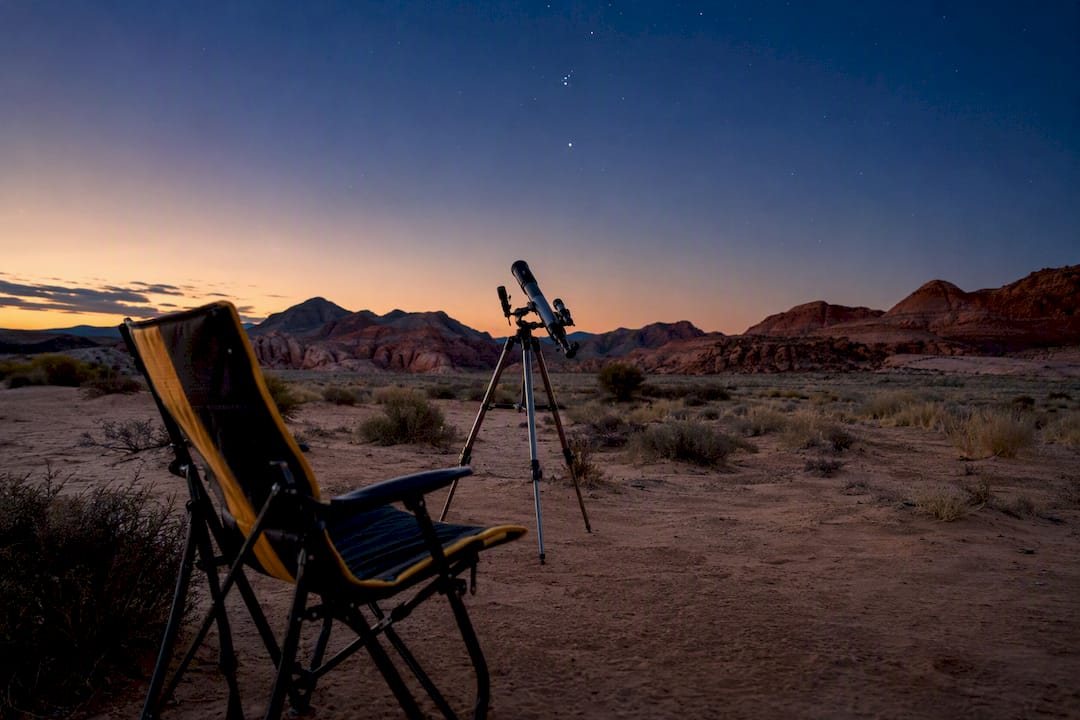
Elevation compounds the effect. Cedar Breaks sits above 10,000 feet, well above the valley haze and dust that collects in the St. George basin during warmer months. At that altitude, skies regularly reach Class 2, dark enough to pick out the zodiacal light and dozens of Messier objects with basic binoculars.
Distance and elevation work together rather than separately. A spot that’s dark but low in elevation, like some desert pullouts near Warner Valley, can still suffer from atmospheric haze on hot, dusty days. A higher spot with a shorter drive, like Kolob Canyons, sometimes outperforms a farther but lower location. When you’re picking a site for a specific night, check both how far you’re driving and how high you’re climbing.
Weather and Seasonal Cloud Cover in Southern Utah
Southern Utah’s high desert climate works mostly in your favor, but it isn’t perfectly predictable. Summer monsoon season, roughly July through early September, brings afternoon thunderstorms and buildup that can cloud out an evening with little warning. Check radar in the late afternoon before committing to a drive on a summer night.
Winter offers some of the clearest, driest air of the year, though temperatures at elevation drop sharply after sunset. A clear December night at Cedar Breaks can mean single-digit wind chill, even though St. George itself stays mild.
Spring and fall tend to split the difference, with generally stable weather and fewer surprise clouds. Wind is the bigger factor in these shoulder seasons, especially at exposed overlooks like Lava Point, where gusts can make long camera exposures difficult and cold uncomfortable.
Humidity plays a role too. Southern Utah’s dry air keeps atmospheric distortion low compared to more humid regions, which is part of why the region draws astrophotographers year round. Before any trip, check a clear-sky chart or cloud-cover forecast specific to your target elevation, not just the St. George city forecast, since conditions at 10,000 feet can differ completely from the valley floor.
Family Stargazing Activities St. George: Tips for Beginners
Bringing kids or first-timers changes the calculus a little. You want a spot with easy parking, flat ground, and enough interest to hold attention past the first ten minutes.
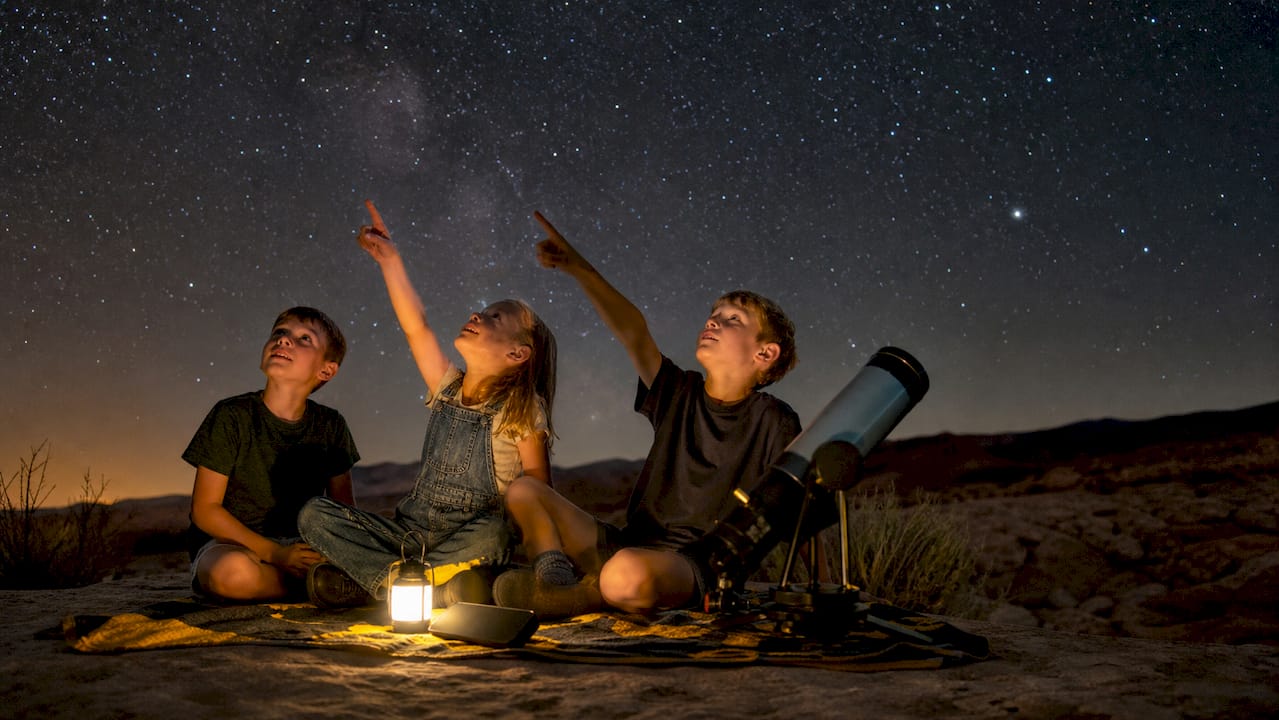
Snow Canyon and Sand Hollow both work well for this because you don’t need to hike far from the car, and restrooms are nearby. Attending a St. George Astronomy Group star party is often the easiest entry point for beginners, since volunteers set up telescopes and point out constellations without requiring you to know anything in advance.
Keep early outings short, maybe 45 minutes to an hour, and build in something concrete to look for: the Moon’s craters through binoculars, Jupiter’s four largest moons, or a bright planet low on the horizon. Kids tend to lose patience with an unstructured “just look up” approach, so having a specific target keeps things engaging.
Dress warmer than you think you need to, even in shoulder seasons, since sitting still in the desert after dark cools down quickly. A simple star chart app on a phone, set to red-light night mode, turns a passive activity into a scavenger hunt that holds a child’s attention far longer than a bare view of the sky.
Apps and Tools for Identifying What You’re Seeing
A phone app turns an unfamiliar sky into something you can actually navigate. Point-and-identify apps use your phone’s compass and GPS to overlay constellation names, planet positions, and satellite paths in real time, which is especially useful for observe constellations St. George sessions where you’re not sure what you’re looking at.
Look for an app with a red-light or night mode, since a full-brightness white screen will undo your night vision instantly. Many of these apps also flag upcoming events, like a visible pass of the International Space Station or a planetary conjunction, days in advance.
For planning rather than in-the-moment identification, a moon-phase calendar app helps you pick the darkest nights well before you pack the car. Weather apps that show cloud cover by altitude, not just surface forecast, are worth the extra step for anyone driving to Cedar Breaks or Lava Point, where valley weather and mountaintop weather rarely match.
Binoculars remain the most underrated tool in the kit. A basic pair reveals Jupiter’s moons, the Orion Nebula, and countless star clusters that are invisible to the naked eye but require none of the setup time of a telescope.
Meteor Showers, Eclipses, and Planetary Events Worth Planning Around
St. George’s dry, high-desert air makes it a strong viewing location for annual celestial events, provided you time your trip around the calendar.
The Perseid meteor shower peaks in mid-August and is one of the most reliable shows of the year, often producing dozens of visible meteors per hour from a dark site like Cedar Breaks or Gunlock. The Geminids, peaking in mid-December, rival the Perseids in intensity and benefit from the region’s typically clear winter skies, though you’ll want serious layers at elevation.
Lunar eclipses are visible from anywhere near St. George with a clear horizon and don’t require a dark-sky drive at all, since the Moon is bright enough to see through mild light pollution. Solar eclipses are rarer and require eye protection, but southern Utah’s open desert horizons make it an excellent regional vantage point when one passes through.
Planetary conjunctions, when two or more planets appear close together in the sky, happen several times a year and are easy for beginners to spot with the naked eye or basic binoculars. Checking a stargazing app or a local astronomy club’s calendar a few weeks ahead lets you plan a trip around whichever event lines up with clear, moonless conditions.
Planning a Multi-Night Trip Around Clear Skies
Weather in the desert can flip overnight, so I’ve learned to build flexibility into any stargazing trip rather than betting everything on one evening. Booking two or three nights instead of one gives you a real shot at hitting a clear, new-moon window even if the first night gets clouded out.
Pairing a daytime hike through Snow Canyon or Zion with an evening drive to a dark-sky spot makes the most of daylight and darkness alike. A private patio at a rental home, with room to store binoculars and camera gear without cramming into a hotel room, makes those late nights and early mornings a lot easier to manage.
— Jacob
Make a Vacation Rental Your Stargazing Basecamp
Rentalsinstgeorgeutah is the practical alternative to a hotel room for anyone chasing clear skies. A hotel gives you a bed and a parking spot; a private vacation home gives you a patio to set up a telescope, a driveway for gear-loaded vehicles, and the flexibility to come and go at 2 a.m. without disturbing anyone.
When you’re booking a stay built around stargazing, look for a rental with an outdoor patio or backyard, secure parking for a truck or SUV, and a location close to Snow Canyon or Sand Hollow so a spontaneous clear night doesn’t mean a long drive. Flexible check-in matters too, since you may want to nap before a midnight session rather than rush in after a long travel day.
Browse available vacation homes in St. George and check dates around the next new moon. A well-placed rental turns one clear night into a full weekend of stargazing without the compromises of standard hotel stays.
Official Pages and Club Resources to Check Before You Go
Confirm hours and fees at Snow Canyon and Gunlock, check SGAG’s event calendar, and review DarkSky International for certification details.
Sources
- Snow Canyon State Park events
- Star Gazing Locations
- Stargazing in St. George, Utah, United States — Light Pollution & Tonight’s Sky | SkyAlmanac
- Dark Skies Astronomy Tours | Explore Starry Skies Today
- Greater Zion dark-sky page
FAQ
Where is the best place to stargaze in St. George, Utah?
Snow Canyon State Park is the best combination of convenience and darkness, sitting just 15 to 20 minutes from downtown with ranger-led programs and low light spill.
Where can I see the best night sky in Utah near St. George?
Cedar Breaks National Monument offers the darkest skies within a day trip, with International Dark Sky Park status and Class 2 conditions at over 10,000 feet elevation.
Where is the darkest place in Utah to see stars?
Cedar Breaks is the darkest certified option near St. George, though remote desert spots like Warner Valley can rival it on clear nights without official designation.
When can I see the Milky Way in Utah?
The Milky Way’s bright core is visible from April through September, peaking in summer, and shows up best on new-moon nights away from St. George’s city lights.
Does St. George have any guided stargazing tours?
Yes, Dark Skies Astronomy Tours runs guided nights about 35 minutes from downtown with telescopes and narration, and the St. George Astronomy Group hosts free public star parties.