For a wedding weekend in St. George, the smartest lodging move is booking a vetted, wedding-capable vacation home sized for your full party through a local specialist like Rentalsinstgeorgeutah. Before you book, confirm three things: the property sits in an approved short-term rental zone, the listing allows events in writing, and it has the sleeping capacity plus parking to actually hold your group.
TL;DR:
- Only properties in approved resort or planned-development zones with proper licensing and confirmed event permits can legally host weddings in St. George.
- Booking 60 to 90 days in advance is recommended, with earlier reservations needed for holiday weekends or peak seasons due to limited inventory.
- Confirm the property’s event addendum, parking details, and insurance requirements in writing before making a deposit to avoid legal or logistical issues.
- Wedding-specific expenses typically include a separate event fee, cleaning fee, damage deposit, and approximately 13.32% combined taxes.
- Choosing a large, outdoor-friendly home with verified capacity and amenities simplifies logistics and enhances guest comfort during wedding weekend stays.
Table of Contents
- Which Rental Types Work Best for Wedding Parties?
- How Do You Vet a Listing for a Wedding Weekend?
- What Are St. George’s Short-Term Rental Rules and Taxes?
- What Logistics Should You Confirm Before the Wedding Weekend?
- When Should You Book, and How Do You Save Money?
- How Do You Legally Secure Permits for a Wedding at a Rental?
- Which St. George Rentals Actually Work for Weddings?
- How Do You Compare Venues for Group Size and Comfort?
- What Does a St. George Wedding Rental Actually Cost?
- Who Are Trusted Local Vendors for a St. George Wedding Weekend?
- What Legal and Insurance Steps Protect a Rental Wedding?
- Why a Wedding-Ready Vacation Home Beats the Alternatives
- How Rentalsinstgeorgeutah Supports Wedding Weekends
- Book Your St. George Wedding Weekend Rental
- Where to Confirm Rules Before You Book
- Sources
- FAQ
Which Rental Types Work Best for Wedding Parties?
Not every vacation home handles a wedding weekend well. The right match depends on how many people you’re housing and whether you want everyone under one roof or spread across a few units.
Single large homes work best when your priority is togetherness. Everyone wakes up in the same house, shares coffee in the same kitchen, and there’s no shuttle logistics between getting-ready spots. These homes shine for parties of 10 to 20 who want the rehearsal dinner, the morning-of chaos, and the late-night wind-down all in one address.
Paired or adjacent units solve a different problem. If the bride’s side needs a private getting-ready space away from groomsmen or in-laws, two connected homes or condos give you overflow sleeping without losing the shared-experience feel. This setup also helps when your total headcount exceeds what any single home can sleep.
Resort and planned-development homes in communities like Entrada, Desert Color, The Ledges, or Green Valley are worth a close look because these are the neighborhoods St. George has designated for short-term rentals, which tends to simplify compliance and event hosting since they’re built with visiting groups in mind.
Whatever style you choose, run through this amenity checklist before you commit:
- True bedroom count (not “sleeps 12” on a pull-out couch math)
- Ensuite or nearby full bathrooms for each sleeping cluster
- A kitchen that can handle a caterer or a DIY rehearsal dinner
- Outdoor gathering space for photos, cocktail hour, or a small first-look
- On-site parking that won’t force guests onto a narrow residential street
Browsing vacation homes in St. George by bedroom count first, then amenities, saves you from falling for photos that don’t match your headcount.
How Do You Vet a Listing for a Wedding Weekend?
Screening a rental for a wedding takes more diligence than booking a weekend getaway. Run through this sequence before you put down a deposit:
- Ask for an event addendum. Get the event-guest cap in writing, separate from the overnight occupancy number. Properties that host events regularly publish both figures clearly instead of making you guess.
- Request a parking diagram. Ask exactly how many vehicles fit on the property, where overflow parking happens, and which door vendors use for load-in.
- Check sewer or septic capacity. A home on a septic system built for six people can struggle with 40 guests using the bathrooms during a reception. If capacity looks tight, plan for portable restrooms.
- Get a named property manager in writing. You want a real contact with a 24-hour phone number, not a chatbot or a generic email address.
- Clarify what’s included. Tables, chairs, extra linens, and cleaning turnover expectations should all be spelled out before you sign anything.
Pro Tip: Filter listings for “events allowed” rather than assuming a large home welcomes a wedding. The Knot’s guide to booking wedding rentals confirms that hosts who allow gatherings will say so explicitly, and the ones who don’t will often decline outright once you mention “wedding” in a message.
What Are St. George’s Short-Term Rental Rules and Taxes?
St. George doesn’t allow short-term rentals citywide. The city restricts them to designated resort and planned-development zones, so before you fall for a listing, confirm the parcel actually qualifies.
Approved areas generally include Green Valley, Entrada, The Ledges, and Desert Color, and operators there need a Short Term Rental Business License, which runs an annual general business license fee on top of inspection requirements. Outside those zones, a single-family home can sometimes still qualify under City Code § 10-17A-13, but only if it sits on a lot of two acres or more, fronts an arterial road, and stays at least 500 feet from another short-term rental. That’s a narrow exception, not a loophole to count on.
By the numbers: Combined lodging taxes on a St. George short-term rental run close to 13.32%, stacking state, county, and city transient room tax. Some booking platforms collect part of this automatically; direct bookings often require the host to handle it.
City code also requires operators to maintain a local property manager available around the clock, with contact information posted visibly inside the unit. In unincorporated parts of the county, Washington County’s own licensing process adds a requirement for proof of insurance with a landlord endorsement. None of this is optional paperwork. It’s the difference between a legal booking and a rental that gets shut down mid weekend.
What Logistics Should You Confirm Before the Wedding Weekend?
The legal groundwork only gets you halfway there. The details that actually make or break the day happen on-site, and they’re easy to overlook until they become a problem at 4 p.m. on your wedding day.
- Parking capacity and overflow. Count vehicles realistically, not optimistically, and line up shuttle service or overflow lots if your guest list exceeds what the driveway holds.
- Vendor load-in windows. Confirm when the caterer, florist, and rental company can arrive, where their trucks park, and whether they have room to turn around.
- Power access. A DJ setup, string lights, and a coffee cart can trip a household circuit fast. Ask whether a generator makes sense for the reception space.
- Trash and dumpster plan. A wedding generates more waste than a typical weekend stay, and a clear breakdown schedule keeps the property turnover on track for the next guests.
- Sound cutoff times. Amplified music past a certain hour draws noise complaints and fines in residential-adjacent zones, so lock in the cutoff before you book the band.
For groups spread across multiple rentals or bringing guests in from the airport, a charter bus service solves the shuttle problem cleanly and keeps everyone off the road after the reception.
When Should You Book, and How Do You Save Money?
Timing matters more than most couples expect. For a typical weekend, book 60 to 90 days out. For peak dates, holiday weekends, or anything near a St. George festival, push that to four to six months ahead, because the wedding-capable inventory in approved zones is limited and it moves fast.
On platform versus direct booking: Vrbo filters well for whole-home rentals and works fine for groups of eight or more, since the platform is built around entire properties rather than shared spaces. Booking direct, when the option exists, tends to remove platform service fees entirely and gives you room to negotiate event terms directly with the property manager, and groups can save meaningfully since those platform fees typically add a significant percentage to the total.
Budget beyond the nightly rate. Expect a cleaning fee, often a separate event fee, and a refundable damage deposit on top of the base cost. Divide all of it by your headcount early so nobody’s surprised at checkout. Whatever you negotiate for event terms, get it in writing before you send a deposit.
How Do You Legally Secure Permits for a Wedding at a Rental?
Start by confirming the property’s underlying eligibility, since a rental that isn’t a licensed short-term rental can’t legally host a paid event regardless of what the host promises. Ask for the license number and cross-check it against the city’s records.
Next, request the property’s event addendum in writing. This document should spell out the maximum event-guest count, allowed hours, noise cutoff, vendor access windows, and any additional event fee. If the host can’t produce one, treat that as a warning sign rather than a formality to skip.
Third, ask whether the property or the booking requires event liability insurance. Many hosts now require a one-day event policy, which typically costs far less than most couples assume and protects both sides if something goes wrong.
Fourth, get the agreed terms confirmed by email or a signed addendum, not a verbal promise from a listing agent. Include the guest cap, hours, vendor list, and fee breakdown so there’s a paper trail if a dispute comes up later.
Finally, build in a buffer. Submit your documentation and confirm approval at least 30 days before the wedding date, since some property managers need lead time to schedule pre-event inspections or notify neighboring properties about noise expectations. Rushing this step is how couples end up with a canceled booking two weeks out.
Which St. George Rentals Actually Work for Weddings?
Look for properties that combine real bedroom counts with outdoor space built for gathering, not just a nice pool photo. In resort communities like Entrada and The Ledges, many homes sleep 12 to 20 across five or six bedrooms, with casitas or guest houses adding overflow capacity for a getting-ready suite separate from the main house.
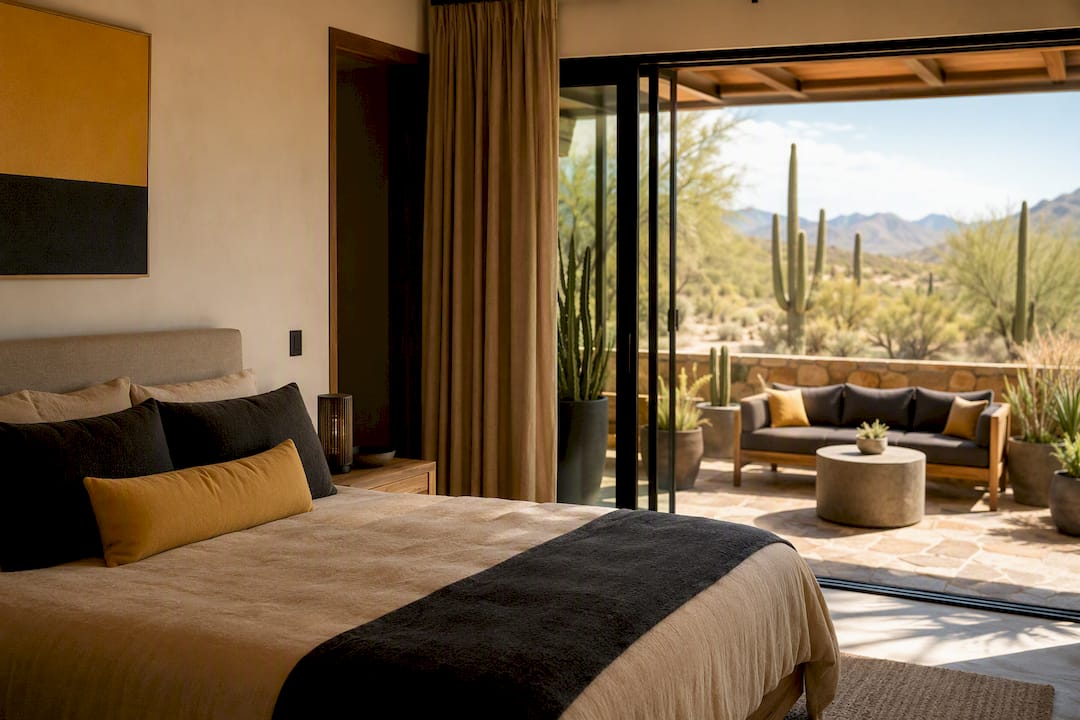
Desert Color and Green Valley properties often add community amenities such as shared clubhouses or event lawns, which can work as a backup rain plan or a secondary gathering spot for a rehearsal dinner. Multi-unit condo complexes near downtown St. George offer a different advantage: several adjacent units booked together give you flexibility for guests arriving on different timelines, without requiring one massive home.
When you’re browsing house rentals in St. George, filter first by bedroom and bathroom count against your actual guest list, then check for a backyard, patio, or covered outdoor space large enough for a ceremony or cocktail hour. Condo-style options are worth a look too if your group values proximity to restaurants over having a private yard.
How Do You Compare Venues for Group Size and Comfort?
Start with hard numbers before anything else. Match true bedroom count and bathroom ratio against your guest list, then check whether the layout works for who’s actually staying, since grandparents on a top-floor loft with no elevator access creates a problem no amount of curb appeal fixes.
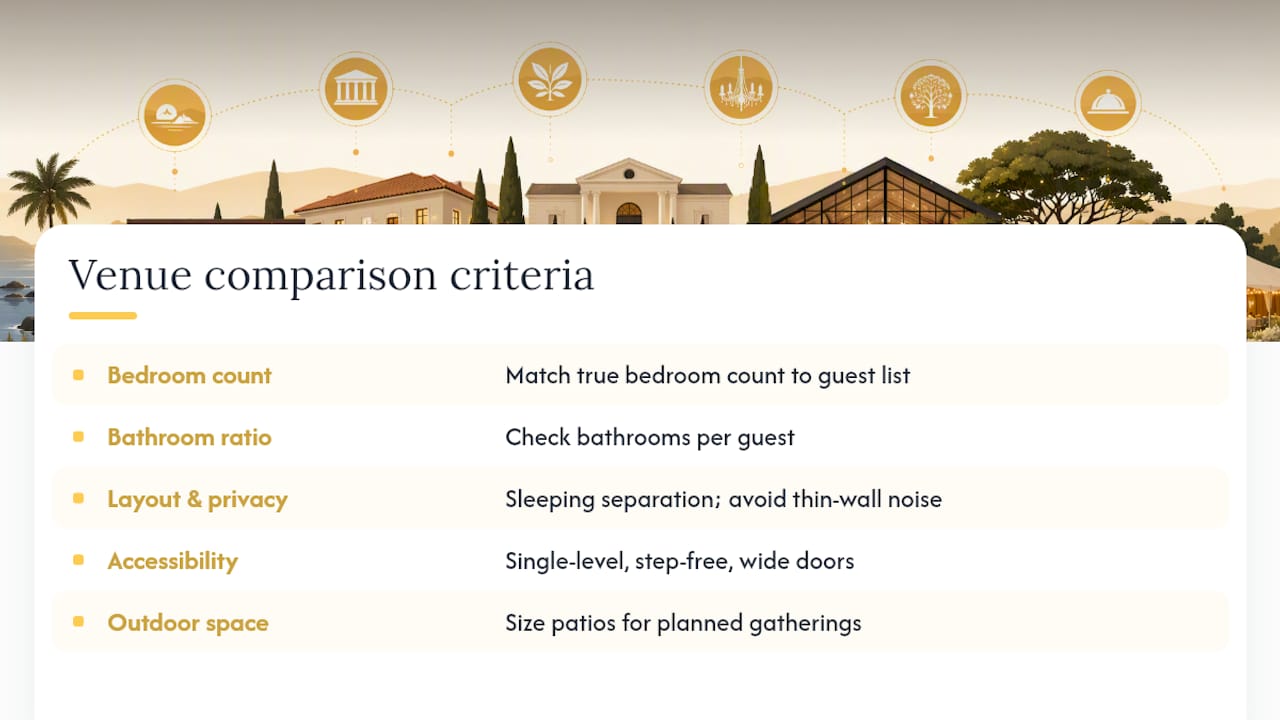
Accessibility deserves specific attention if any guests use mobility devices or have limited stairs tolerance. Ask directly about single-level living space, step-free entries, and bathroom door widths, since listing photos rarely show this clearly.
Guest comfort comes down to overlap and privacy. A single giant house sounds appealing until you realize thin walls mean no one sleeps past 6 a.m. when the early risers start coffee. Compare properties on how sleeping quarters are separated, not just total headcount capacity.
Finally, weigh the outdoor gathering space against your actual event plans. A property with a stunning view but a cramped patio might photograph beautifully and still fail to hold 30 people comfortably for a toast. The Ember Stays comparison of vacation homes versus hotels makes the case well: shared kitchens and common areas consistently beat scattered hotel rooms for groups who actually want to spend time together, not just sleep in the same zip code.
What Does a St. George Wedding Rental Actually Cost?
Break the total cost into five pieces so nothing catches you off guard at checkout. The nightly rate is only the starting point.
- Base rental rate: varies by home size and season, with peak spring and fall weekends commanding the highest nightly rates in resort communities.
- Cleaning fee: typically a flat charge covering standard turnover, though larger homes with event use often carry a higher rate.
- Event fee: a separate charge many hosts add specifically for weddings or gatherings beyond normal overnight guests.
- Refundable damage deposit: held against the card on file and returned after a post-event walkthrough, assuming no damage.
- Lodging taxes: combined state, county, and city transient room tax near 13.32% applied to the rental total.
Divide the full total, taxes and fees included, by your headcount early in planning. It’s the only way to know whether a $2,400 weekend rental actually beats splitting rooms across three hotels once everyone’s travel and food costs get factored in. Browsing home rental deals in St. George side by side helps you compare total cost, not just the advertised nightly rate.
Who Are Trusted Local Vendors for a St. George Wedding Weekend?
The rental you book matters, but the vendors you bring in shape the actual event. Look for caterers and florists who’ve worked inside private residences before, since a wedding venue’s catering team and a home kitchen require different setups entirely.
Ask your property manager directly whether they maintain a preferred vendor list. Many managers of event-friendly homes in Entrada, Desert Color, and The Ledges have worked with the same handful of local caterers and florists repeatedly, which means those vendors already know the property’s kitchen layout, load-in door, and parking constraints. That familiarity alone can prevent a dozen small headaches on the wedding day.
For guest transportation between hotels, rentals, and the event site, a dedicated ground transportation partner keeps larger groups moving safely without a fleet of rental cars clogging a residential street. Charter bus service for weddings works particularly well when your party is split across multiple properties or when the venue sits inside a gated resort community with limited visitor parking.
Before you sign with any vendor, confirm they’ve worked an event at a residential property before, not just a traditional banquet hall. The questions to ask are simple: Have they navigated a home kitchen setup? Do they know the load-in restrictions common in resort communities? A vendor with St. George-specific rental experience will answer both without hesitation.
What Legal and Insurance Steps Protect a Rental Wedding?
Liability sits at the center of hosting any event at a residential property, and it deserves more attention than most couples give it. A vacation rental isn’t built or insured the same way a commercial event venue is, so the coverage gaps matter.
Ask the host directly whether their existing insurance policy covers event use, or whether it only covers standard overnight stays. Many short-term rental policies specifically exclude gatherings above a certain headcount, which means a wedding could fall outside coverage entirely without an add-on. Washington County’s licensing requirements already mandate proof of insurance with a landlord endorsement for the rental itself, but that endorsement typically protects the property, not your event.
Consider a one-day event liability policy in your own name. These policies are inexpensive relative to overall wedding costs and protect you if a guest is injured or property is damaged during the celebration. Some venues and hosts now require proof of this coverage before finalizing a booking.
Get the host’s cancellation and damage-deposit policy in writing, including how disputes over damage get resolved. A verbal assurance that “it’ll be fine” isn’t a substitute for a documented process, and disputes after the fact are far harder to resolve without a paper trail establishing what was agreed upon beforehand.
Why a Wedding-Ready Vacation Home Beats the Alternatives
Most engaged couples researching St. George assume they need a formal venue with a coordinator on staff. That assumption costs them money and flexibility they don’t actually need. A well-vetted vacation home gives you a rehearsal dinner space, a getting-ready suite, and overnight lodging for your entire wedding party under one roof, which a traditional venue booking never includes.
The gap that actually trips couples up isn’t finding a pretty house. It’s assuming every listing that photographs well is legally allowed to host an event. St. George’s zoning restrictions aren’t a bureaucratic footnote. A property outside an approved resort zone can’t legally host your wedding no matter how flexible the host sounds over text message, and a host who doesn’t mention licensing at all is a bigger red flag than one who asks detailed questions about your guest count.
Here’s what the conventional wisdom gets backwards: couples are told to negotiate on price first and worry about logistics later. Flip that order. A property with clear parking capacity, a real event addendum, and a licensed local manager is worth paying more for than a cheaper listing where you’re guessing at septic capacity and hoping the neighbors don’t call the city. The logistics you confirm upfront are what determine whether your wedding weekend runs smoothly or turns into a series of small fires you’re putting out during your own reception.
— Jacob
How Rentalsinstgeorgeutah Supports Wedding Weekends
Rentalsinstgeorgeutah specializes in spacious, family-friendly vacation homes built for exactly this kind of gathering, with private patios, well-equipped kitchens, and plush bedding that make a multi-day wedding weekend feel comfortable instead of cramped.
Booking with a dedicated support team means the event addendum process, parking confirmation, and vendor access questions get handled directly rather than through a faceless platform inbox. Local property managers coordinate details like load-in windows and noise cutoffs so wedding parties aren’t left guessing.
Book Your St. George Wedding Weekend Rental
Rentalsinstgeorgeutah offers wedding-capable homes across St. George’s resort communities, close to Zion National Park access and sized for parties from a dozen guests to over twenty, without the venue-hunting hassle of piecing together a ceremony site and separate lodging.
Start by browsing vacation homes in St. George sized for your wedding party and checking real-time availability for your date. Once you find a fit, request an event addendum outlining your guest count, vendor schedule, and parking needs, then confirm those terms in writing before booking. Every property comes with a local property manager reachable around the clock, plus a dedicated booking representative who can answer questions about event terms directly, so you’re never guessing what’s allowed.
Where to Confirm Rules Before You Book
Check the St. George City Code on short-term rentals and Washington County’s licensing page directly before signing anything. Always verify parcel zoning and license status through the city’s official Citizenserve portal rather than relying solely on a host’s word.
Sources
- Short-Term Rental Laws in St. George, UT (2026): Permits, Taxes & Airbnb Rules | STR Rule Watch
- Short-Term Rental License | Washington County of Utah
- Reduce wedding logistics at short-term rentals | WedStay
FAQ
Can You Legally Host a Wedding at a St. George Vacation Rental?
Yes, but only at properties licensed for short-term rental use within approved resort or planned-development zones, and only when the host has confirmed event use in a written addendum.
What Taxes Apply to a Wedding Weekend Rental in St. George?
Expect combined lodging taxes of roughly 13.32%, covering state, county, and city transient room tax on top of the base rental rate.
How Far in Advance Should You Book a Wedding Rental?
Book 60 to 90 days ahead for typical weekends, and four to six months ahead for peak dates or holiday weekends when inventory in approved zones is limited.
Do You Need Separate Insurance for a Wedding at a Rental Home?
Many standard short-term rental policies exclude event-sized gatherings, so a one-day event liability policy is worth confirming with the host or securing independently.
Which Rental Companies Specialize in Wedding-Capable Homes in St. George?
Rentalsinstgeorgeutah focuses on spacious, family-friendly homes with the bedroom counts and outdoor space wedding parties need, along with dedicated support for event addendum requests.