Red Hills Desert Garden is a free, 4.5-acre water-wise garden at 375 E. Red Hills Parkway in St. George, Utah, open daily from 6:00 a.m. to 10:00 p.m. It packs a surprising amount into a small footprint: roughly 5,000 plants across about 333 species, a replica slot canyon with endangered fish viewing, in-situ dinosaur tracks, and a 1,150-foot stream winding through it all. The garden is managed by the local water conservancy district, and if you’re planning even a short stopover in St. George, it earns a spot on the itinerary alongside bigger draws like Zion.
Here’s what pulls visitors in most:
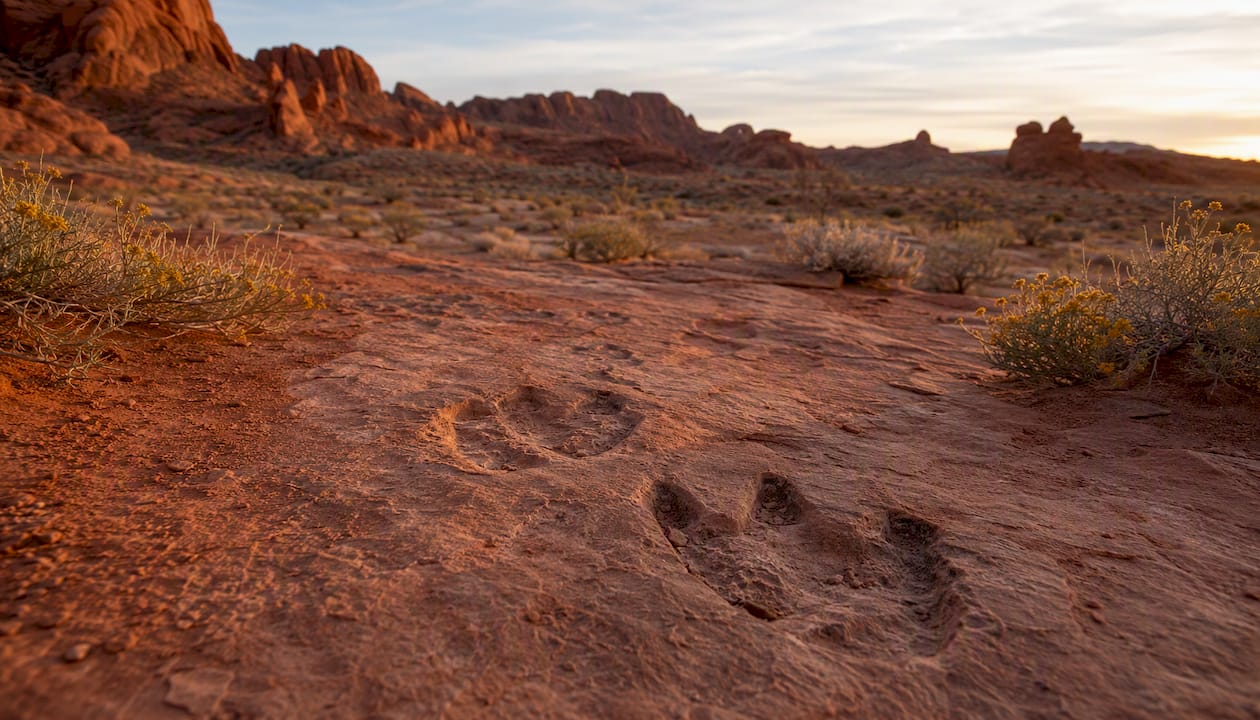
- Dinosaur tracks left exposed in the rock, not roped off behind glass
- A 1,150-foot stream stocked with native and endangered fish you can watch through clear viewing panels
- A replica slot canyon that mimics the narrow red rock passages the region is famous for
- Water-efficient plant displays that double as a working blueprint for desert landscape design you can copy at home
Key Takeaways
Red Hills Desert Garden is a free, 4.5-acre water-wise garden in St. George that pairs dinosaur tracks and endangered fish viewing with a working lesson in drought-tolerant landscaping.
| Point | Details |
|---|---|
| Location and cost | 375 E. Red Hills Parkway, St. George; open 6:00 a.m. to 10:00 p.m. daily, free admission. |
| Top attractions | Prioritize the replica slot canyon, fish viewing panels, and in-situ dinosaur tracks. |
| Visit length | Plan under an hour for a leisurely walk; add time for photos or reading plant tags. |
| Best timing | Early morning or late afternoon gives the best light for fossils and cooler walking temperatures. |
| Where to stay | Rentalsinstgeorgeutah offers family-friendly vacation homes minutes from the garden for an easy overnight base. |
Table of Contents
- Where Is Red Hills Desert Garden and When Can You Visit?
- What Are the Main Attractions Inside the Garden?
- How Many Plants and Species Are in the Garden?
- How Long Should You Plan to Spend There?
- Why Does This Garden Exist, and What Does It Teach Visitors?
- What Does a Short Visit Actually Feel Like?
- Extend Your Stay Near St. George’s Desert Attractions
- Where to Find More Official Information
- Sources
- FAQ
Where Is Red Hills Desert Garden and When Can You Visit?
The garden sits at 375 E. Red Hills Parkway, St. George, UT 84770, just north of downtown and a short drive from Snow Canyon State Park. If you’re coming from I-15, it’s an easy detour whether you’re headed toward Zion National Park or just passing through southern Utah.
Hours run 6:00 a.m. to 10:00 p.m. every day, and admission is free. Dogs are welcome on a leash, and the district asks that owners clean up after their pets, a common-sense rule that keeps the paved trails pleasant for everyone. There’s no ticket booth, no reservation system, and no crowd cap. You show up, park, and walk in.
Parking is on-site and typically sufficient outside of peak spring weekends, when overflow spots along the Red Hills Parkway shoulder pick up the slack. The paved, mostly flat trail network makes the garden accessible for strollers and wheelchairs, with shaded benches spaced along the loop for anyone who needs a break from the sun. Before you go, pull up a map on your phone. The garden doesn’t require a printed brochure to navigate, though a downloadable trifold brochure is available if you want plant details in hand rather than on a screen.
What Are the Main Attractions Inside the Garden?
The layout is compact enough to see everything in one loop, but each feature rewards a slower look.
- Replica slot canyon: Narrow, shaded, and lined with clear acrylic panels that let you look straight into the stream for fish viewing.
- In-situ dinosaur tracks: Original fossil impressions left exactly where they were found, not mounted or relocated.
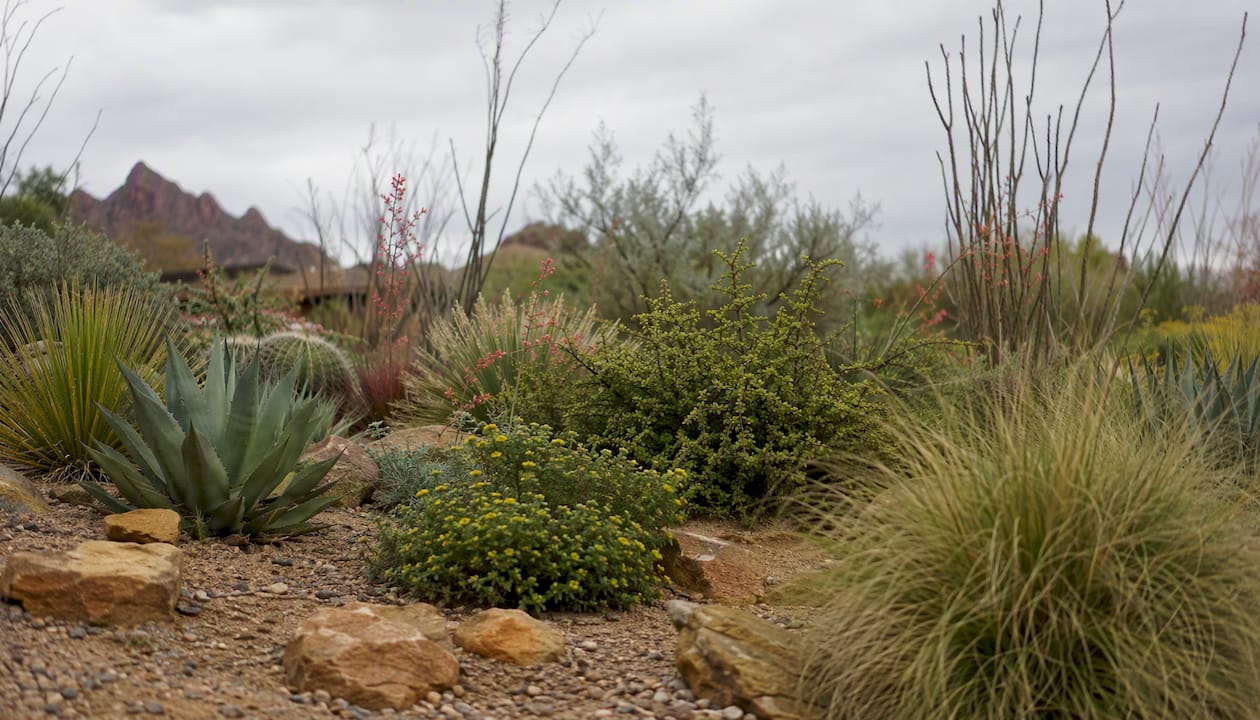
- Seven distinct plant displays: Sections dedicated to sage, agave, yucca, cactus, and rotating floral beds that shift with the seasons.
- The stream running through the garden is over a thousand feet long: A functioning habitat, not a decorative water feature, running the length of the property.
- Shaded meandering trails: Paved paths that wind past seating areas and interpretive signage.
- Seasonal lighting: Evening illumination extends the visit window well past sunset in cooler months.
The best photos come from two spots: inside the slot canyon replica, where the light filters down between the rock walls, and along the stream at golden hour, when the low sun catches the water and the surrounding red rock. If you’re chasing fish photos, position yourself at the acrylic panels when the water is calm, usually early morning before foot traffic picks up.
Pro Tip: Visit the dinosaur tracks in early morning or late afternoon. Low-angle light makes the fossil indentations far easier to spot than the flat glare of midday sun.
How Many Plants and Species Are in the Garden?
The numbers are worth knowing before you go, because they explain why this small garden feels so dense with things to notice. The garden holds close to 5,000 plants representing about 333 species, nearly all of them chosen for their ability to thrive without heavy irrigation. That density of species in 4.5 acres is unusual. Most public gardens this size lean on a handful of showpiece varieties; Red Hills instead functions as a working catalog of what drought-tolerant plants actually look like at maturity.
| Metric | Figure |
|---|---|
| Total area | 4.5 acres |
| Total plants | Approximately 5,000 |
| Plant species | Approximately 333 |
| Stream length | 1,150 feet |
| Annual water saved vs. turf | 5,000,000 gallons |
That water savings figure comes directly from the district’s own comparison against a turf landscape of similar size, and it’s the number that anchors the garden’s entire reason for existing.
A short walk through the displays will introduce you to plants like these:
- Parry’s agave: A silvery-blue rosette with sharp, sculptural leaves that store water for months.
- Banana yucca: Produces a spiky cluster of fruit and needs almost no supplemental watering once established.
- Claret cup cactus: Bursts into vivid red blooms each spring, a favorite stop for hummingbirds.
- Desert sage: Fragrant, silver-leaved, and one of the most reliable native ground covers in the region.
- Red yucca: Not a true yucca, but its coral flower spikes make it one of the garden’s most photographed plants.
- Blackfoot daisy: A low, spreading bloomer that handles reflected heat from nearby rock better than most turf alternatives.
Every specimen carries an identification tag, and many include scannable codes that link to maintenance and irrigation guidance for that exact species. Scan the tag, note whether the plant is native or simply water-efficient, and you’ll walk away with a shortlist of species that could realistically replace thirsty turf in your own yard.
How Long Should You Plan to Spend There?
A leisurely walk through the entire loop takes under an hour for most visitors. Add extra time if you’re photographing the fossils and fish panels, or if you plan to read the interpretive signage at each plant display.
- Visit early morning for the coolest temperatures and the best fossil lighting.
- Return in late afternoon if you missed the morning light or want to catch the evening illumination.
- Time a spring visit for peak bloom on cactus and wildflower displays.
- Avoid midday in summer, when surface temperatures on the rock and paved paths climb fast.
A few accessibility notes worth knowing ahead of time:
- Paths are paved and mostly flat, suitable for wheelchairs and strollers.
- Shaded benches appear at regular intervals along the loop.
- Restrooms and a small visitor area are available on-site.
- Some sections near the stream have uneven natural rock, so mobility-impaired visitors may want to stick to the main paved loop.
The district occasionally hosts workshops and school programs tied to xeriscaping ideas and native plant selection; check the official site before your trip if you want to time a visit around one. Pack light: a refillable water bottle, a hat, sunscreen, sturdy walking shoes, and a phone or camera for the fish panels and fossil close-ups. If you’re bringing a dog, bring a leash and waste bags.
Why Does This Garden Exist, and What Does It Teach Visitors?
Red Hills Desert Garden isn’t a botanical showcase built for its own sake. It’s a deliberate demonstration project, and the fossils and fish are, in a real sense, the hook that gets people to notice the plants.
That sentiment reflects the intent garden manager Ryan White described in a Utah State University Extension case study on the garden’s design philosophy. The strategy works because it doesn’t lead with a lecture. Visitors come for the dinosaur tracks and the fish, then leave having absorbed a lesson in arid climate gardening almost by accident.
The impact shows up in the numbers. The garden drew roughly 150,000 visitors in 2022 alone, and it saves an estimated 5,000,000 gallons of water annually compared to a turf landscape of the same size. In a region where water conservation isn’t optional, that’s a meaningful demonstration of what’s possible on a residential scale, not just an institutional one.
Three ideas you can take home from a single visit:
- Plant selection matters more than volume. A handful of well-chosen species like agave and red yucca can replace a lawn’s worth of water demand.
- Shade planning changes everything. Strategic tree placement creates cooler microclimates that support a wider range of understory plants over time.
- Irrigation should match the plant, not the schedule. Most of the garden’s specimens need only occasional deep watering once established, not a daily sprinkler cycle.
The garden is a joint effort between the Washington County Water Conservancy District, the City of St. George, and the Virgin River Program, three organizations with a shared stake in keeping the region’s water supply sustainable as the population grows.
What Does a Short Visit Actually Feel Like?
Walk in from the parking area and the temperature drops almost immediately once you’re under the shade canopy near the slot canyon entrance. The stream is audible before it’s visible, a quiet trickle that cuts through the desert quiet. Inside the replica canyon, the acrylic viewing panels reveal fish moving through water so clear it barely looks real, and there’s usually a small cluster of kids pressed against the glass trying to spot movement.
For a 45 to 60 minute visit, this route works well:
- Start at the main entrance and head straight for the slot canyon and fish viewing panels while the morning light is still soft.
- Loop past the dinosaur tracks next, since the same low-angle light that flatters photos also makes the fossil impressions easiest to see.
- Wind through the cactus and agave displays, reading a few plant tags along the way.
- Finish at the seasonal floral beds near the exit, which tend to be the most colorful stop on the walk.
Pro Tip: If fossil viewing is your priority, repeat what works for photography: early morning or late afternoon light reveals detail that midday sun washes out completely.
Extend Your Stay Near St. George’s Desert Attractions
A garden visit pairs naturally with a longer stay in St. George, especially if you’re also planning time at Snow Canyon State Park or making the drive toward Zion. Rentalsinstgeorgeutah gives you a home base that’s minutes from Red Hills Desert Garden, with full kitchens and outdoor space so you’re not stuck eating every meal out after a day of hiking and sightseeing.

Booking a vacation home in St. George instead of a standard hotel room gives you a few practical advantages for a desert-focused trip:
- Family-friendly layouts with enough room to spread out after a day outdoors
- Private patios and outdoor areas to relax in the evening once the desert heat breaks
- Full kitchens, useful for packing water and snacks before an early garden visit
- Flexible, customizable stay options if you’re adding stops like Zion to your trip
You can browse available houses and rental deals directly on the Rentalsinstgeorgeutah site, filter by dates, and book online in a few minutes. If a short weekend trip is more your speed, start with the homepage to see what’s available for your travel window.
Where to Find More Official Information
A few sources are worth bookmarking if you want details beyond this guide:
- The official Red Hills Desert Garden site lists current hours, admission rules, and on-site guidelines.
- The Washington County Water Conservancy District’s gardens page explains the plant identification system and scannable code tools.
- The Utah State University Extension case study covers the garden’s design philosophy and manager insights in more depth.
- The Wikipedia entry summarizes the garden’s history, opening date, and visitor statistics.
- The downloadable garden brochure offers a printable plant list and water-savings figures for reference.
Sources
- Red Hills Desert Garden
- Red Hills Desert Garden — Wikipedia
- Things to do — Red Hills Desert Garden
- Gardens | Washington County Water Conservancy District
- Case Study: Red Hills Desert Garden | USU
FAQ
How long does it take to see the Red Hills Desert Garden?
A leisurely walk through the entire loop takes under an hour. Add extra time if you’re photographing the fossils, fish, or reading plant identification tags throughout the displays.
Is the Red Hills Desert Garden worth visiting?
Yes, especially if you’re already in St. George. It’s free, takes under an hour, and combines dinosaur tracks, endangered fish viewing, and a replica slot canyon in one compact stop.
What makes the Red Hills Desert Garden unique?
Few gardens combine in-situ dinosaur fossils, a functioning stream with endangered native fish, and nearly 5,000 water-efficient plants in one 4.5-acre site. That mix of natural history and xeriscaping ideas sets it apart from a typical botanical garden.
Are there dinosaur tracks at the Red Hills Desert Garden?
Yes, the garden features original, exposed dinosaur tracks left in-situ rather than mounted or relocated. Early morning or late afternoon light makes the fossil impressions easiest to see.
Where can I stay near the garden for an extended visit?
Rentalsinstgeorgeutah offers family-friendly vacation homes just minutes from Red Hills Desert Garden, making it easy to pair a garden visit with a longer stay in St. George.